
Artisan jewelry is not only jewelry made by hand. It is jewelry shaped by time, material, and a maker’s judgment — the kind of work where a curve, a stone, or a trace of texture still carries a human decision.
This guide looks at what artisan jewelry means, how it differs from handmade or mass-produced jewelry, and what to notice when choosing a piece made in a small studio.
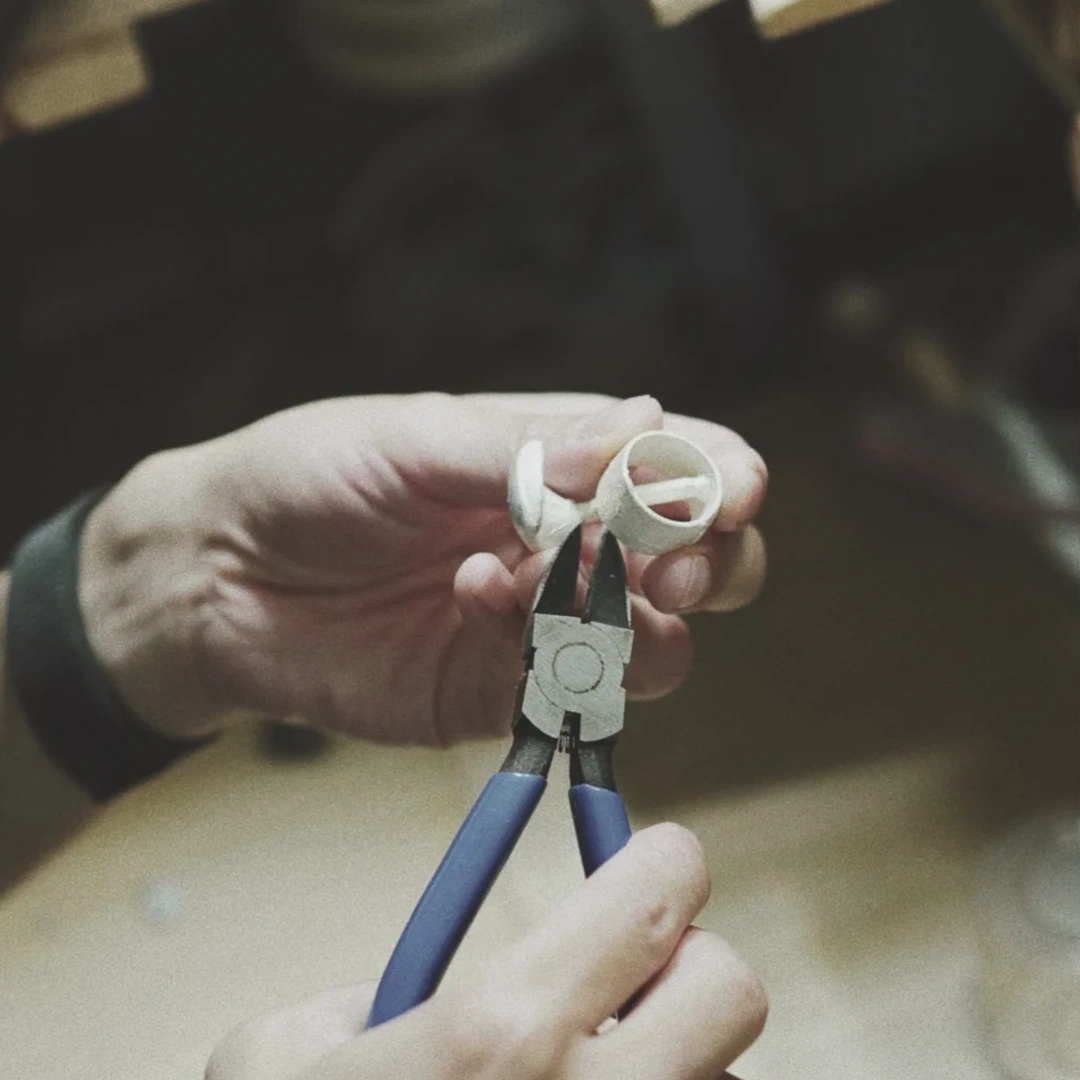
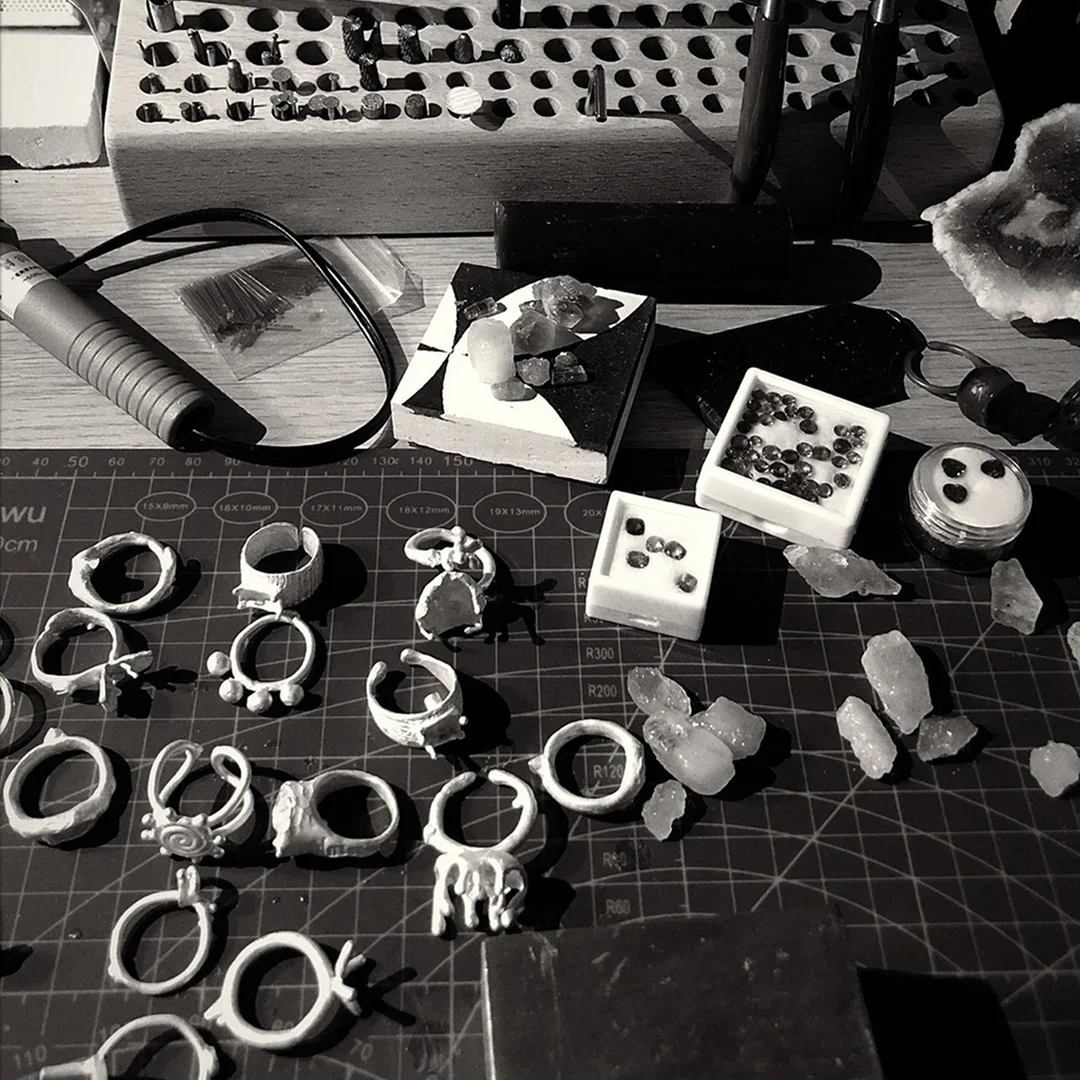
Artisan jewelry is jewelry made with a person’s hand, eye, and judgment at the center of the work.
Not just assembled. Not only decorated. Made with intention, usually in a small studio, through slower methods that leave room for decision: the curve of a line, the weight of a ring, the placement of a stone, the texture that stays instead of being polished away.
That is the simplest answer.
But the better answer is quieter: artisan jewelry is the opposite of jewelry that could have been made by nobody in particular.
It carries evidence of a maker.
Jewelry has always lived between adornment, object, and cultural record. Historic and contemporary museum collections, like the V&A’s jewelry collection, show how often a small object can hold craft, identity, and time in the same form.
The Meaning of Artisan Jewelry
The word “artisan” comes from the world of skilled craft. In jewelry, it usually refers to pieces made by independent makers, small studios, or designer-makers who are directly involved in the process.
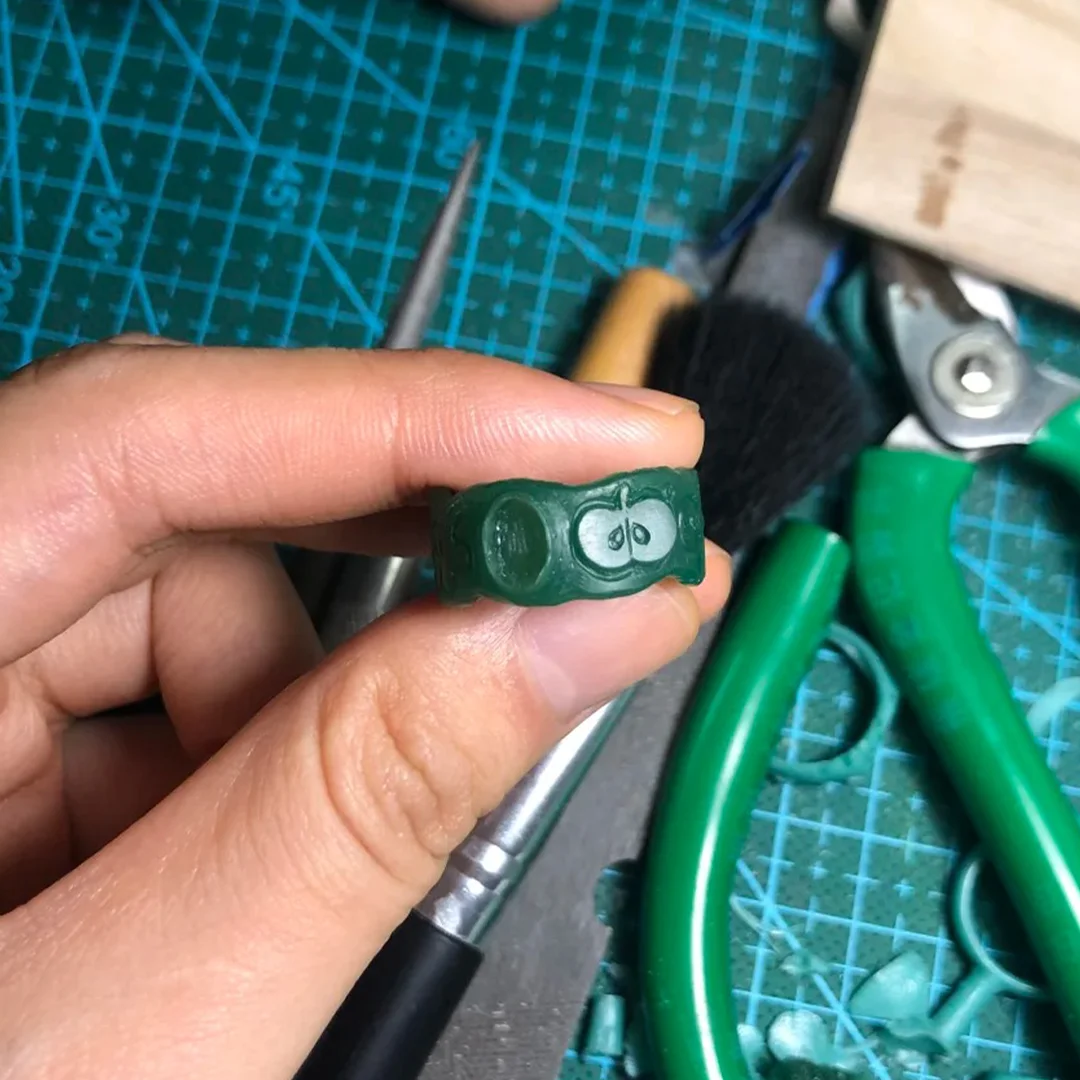
An artisan piece may be carved in wax, cast in silver, filed by hand, set with natural stone, or finished one surface at a time. The exact technique changes from studio to studio. What stays the same is the presence of human judgment.
That judgment matters.
A machine can repeat a shape. A trend can repeat a mood. A production line can repeat a style until it loses its pulse.
An artisan makes decisions.
One curve is softened. One edge is left raw. One stone is chosen because its cloudy center says more than a flawless surface would. One ring is made slightly heavier because the hand wants weight, not decoration.
That is why artisan jewelry often feels personal before it is personalized.
Artisan Jewelry vs. Handmade Jewelry
Artisan jewelry and handmade jewelry overlap, but they are not always the same thing.
Handmade jewelry simply means that hands were involved in making it. That can mean a wide range of things: a fully hand-carved silver ring, a beaded necklace assembled by hand, or a charm attached to a pre-made chain.
Artisan jewelry goes a little further. It suggests skill, authorship, and a point of view.
A handmade piece may be made by hand.
An artisan piece is usually made by hand with a recognizable intention behind it.
The difference is not about being precious. It is about whether the maker’s choices are visible. Shape, material, proportion, finish, and construction all begin to speak.
At Lazesoul, this is the line that matters most: a piece should not feel like a product first. It should feel like work. Slow work. The kind that shows.
Artisan Jewelry vs. Mass-Produced Jewelry
Mass-produced jewelry is built for repetition. A design is finalized, reproduced in quantity, and made as consistent as possible. The goal is sameness: every piece looks like the next.
There is nothing mysterious about that. It is how most fashion jewelry reaches the market quickly.
Artisan jewelry moves differently.
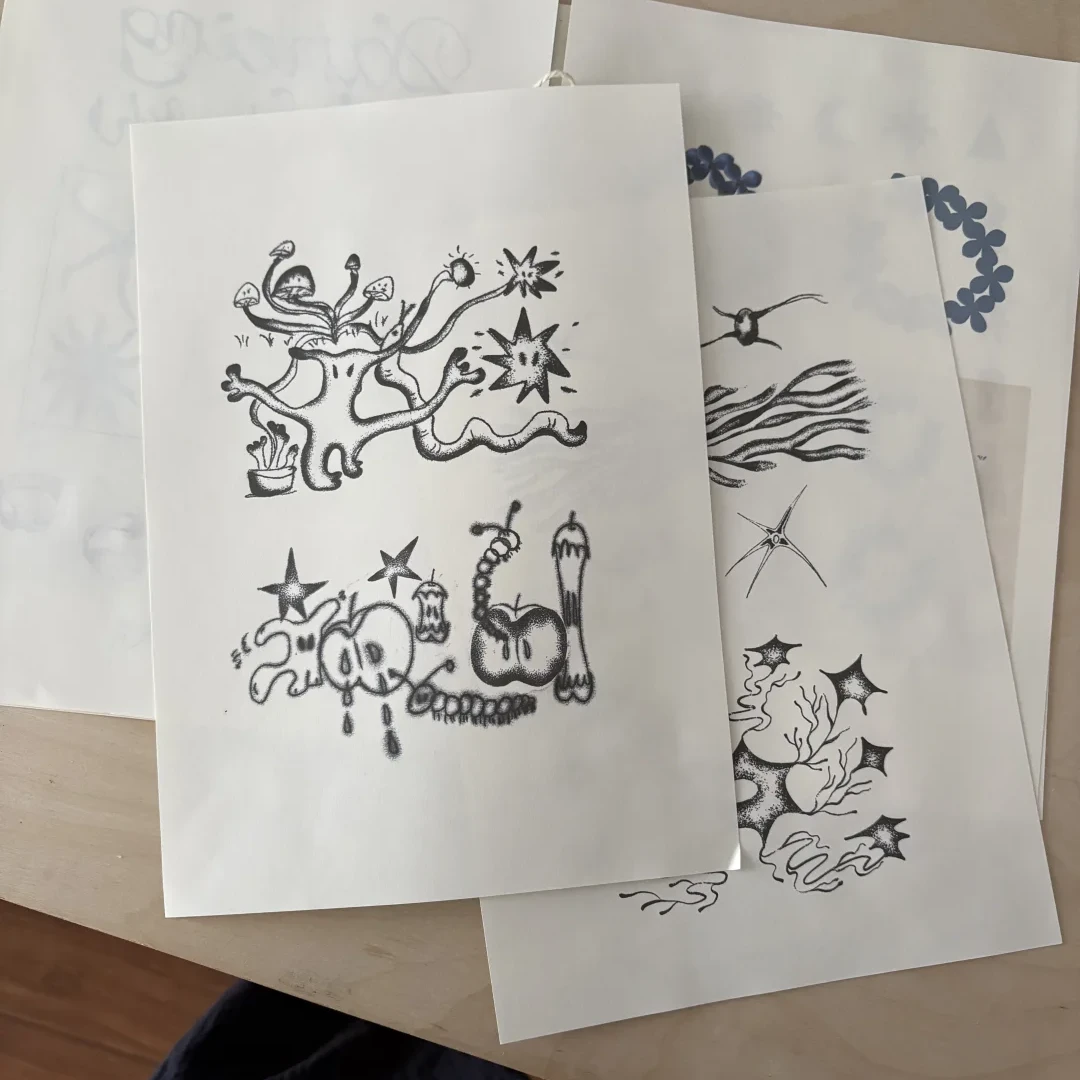
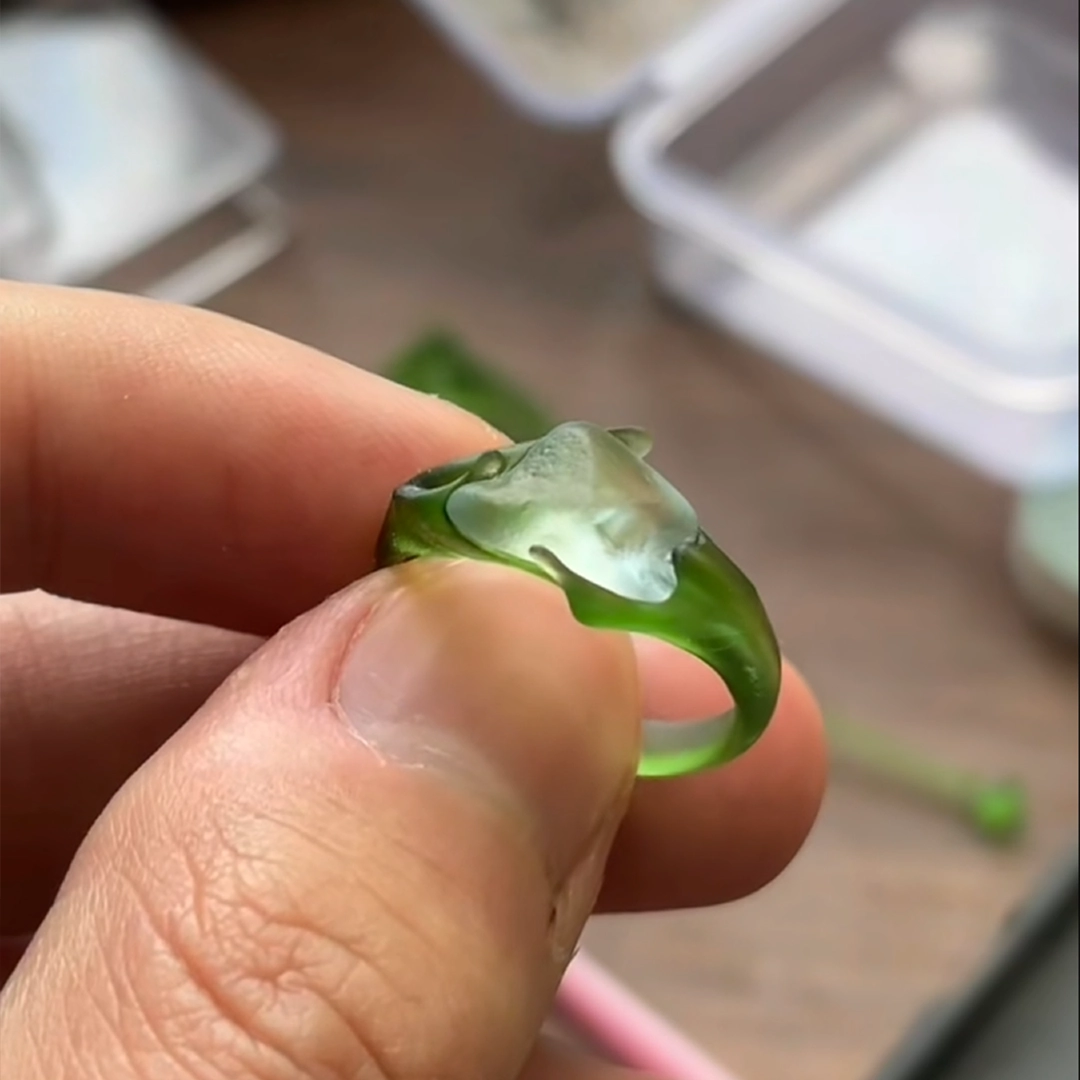
It is usually made in smaller batches, often to order, and sometimes one piece at a time. The maker may begin with a sketch, a wax model, a stone, or a memory. The process can include carving, casting, soldering, filing, polishing, oxidizing, stone setting, and many small corrections that never appear in a product title.
The result is not industrial sameness. It is continuity with variation.
Two rings may share the same design, but the surface will not age in exactly the same way. Two natural stones may belong to the same family, but light will move through them differently. A hand-polished edge will carry a softness that a machine finish often does not.
These are not flaws to hide.
They are signs that the piece passed through time.
Why the Word “Artisan” Matters
The word matters because it protects the presence of the maker.
In fast fashion, the maker often disappears. The person who designed the object, the person who produced it, and the person who sells it may never be part of the same story. The final piece arrives clean, polished, and strangely anonymous.
Artisan jewelry asks for a different kind of attention.
Who shaped this?
What material did they choose?
Was the surface plated, or is the silver real throughout?
Was the stone selected for uniformity, or for character?
Does the piece feel like it belongs to a trend cycle, or to someone’s private language?
These questions change how jewelry is worn.
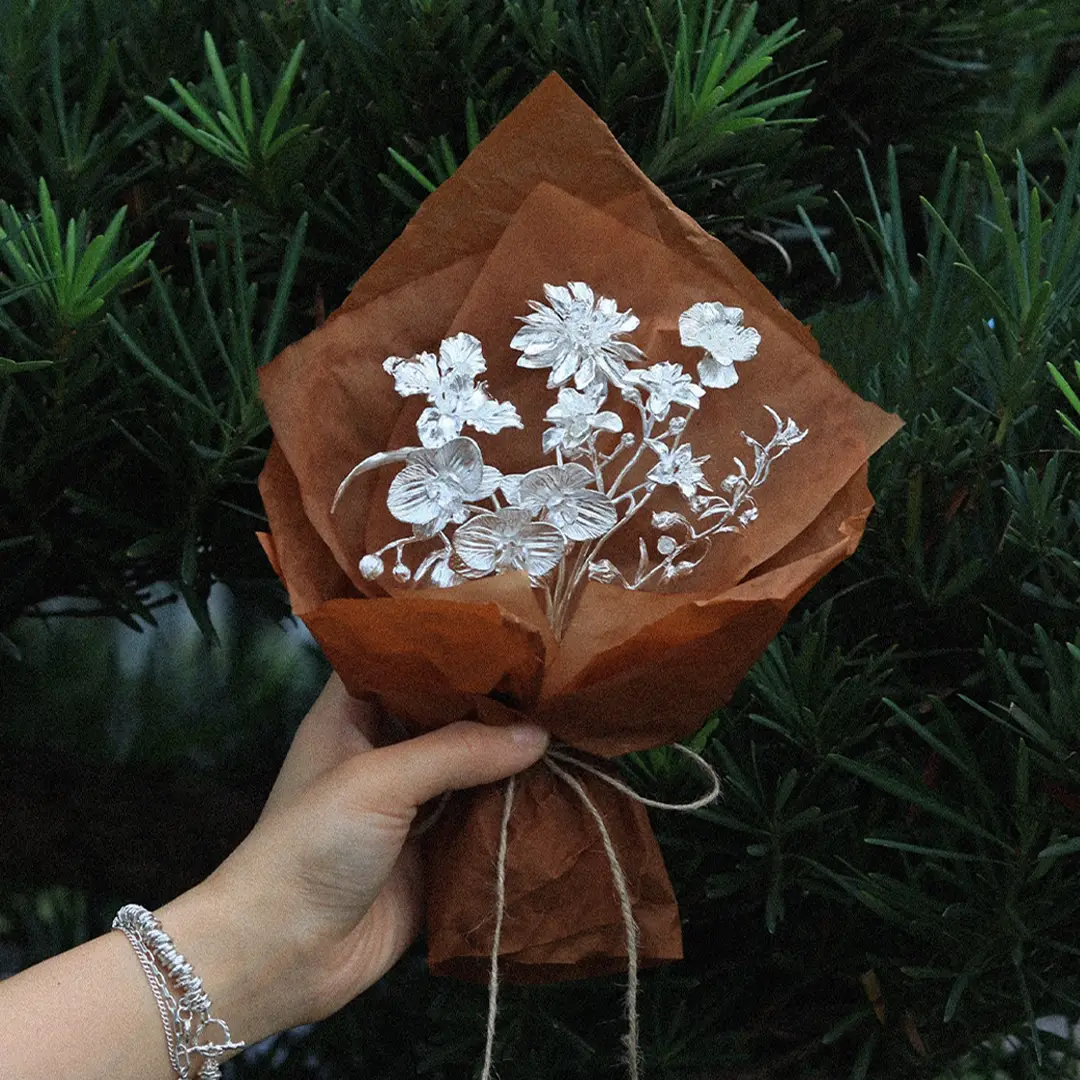
A ring becomes more than an accessory when its weight, texture, and making are understood. An earring becomes more than a shape when the curve was tested against the ear. A flower cast in silver becomes more than a flower when every petal was first observed, then translated, then made permanent.
Common Techniques in Artisan Jewelry
Not every artisan jeweler uses the same methods, but several techniques often appear in small-studio silver work.
Lost-Wax Casting
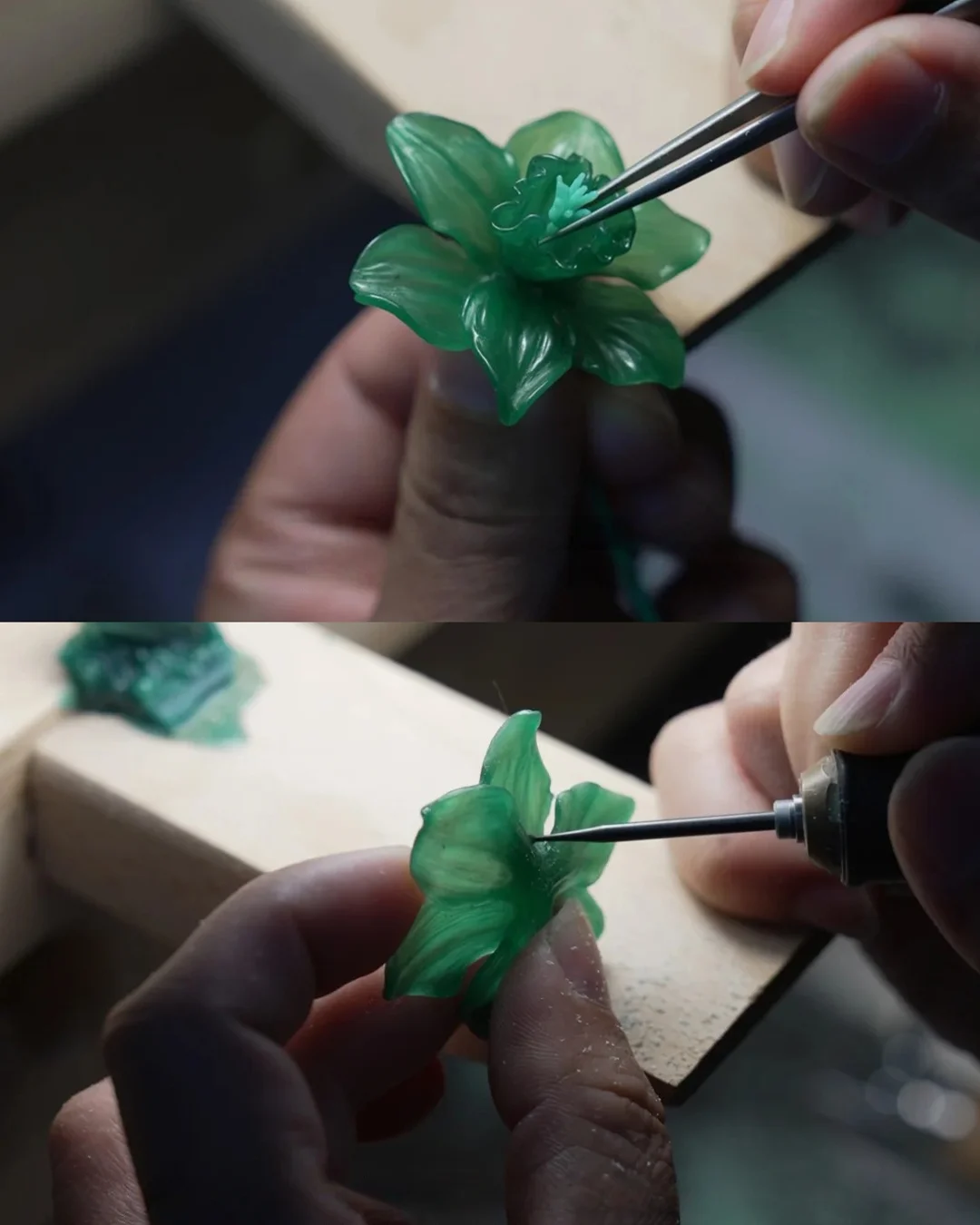
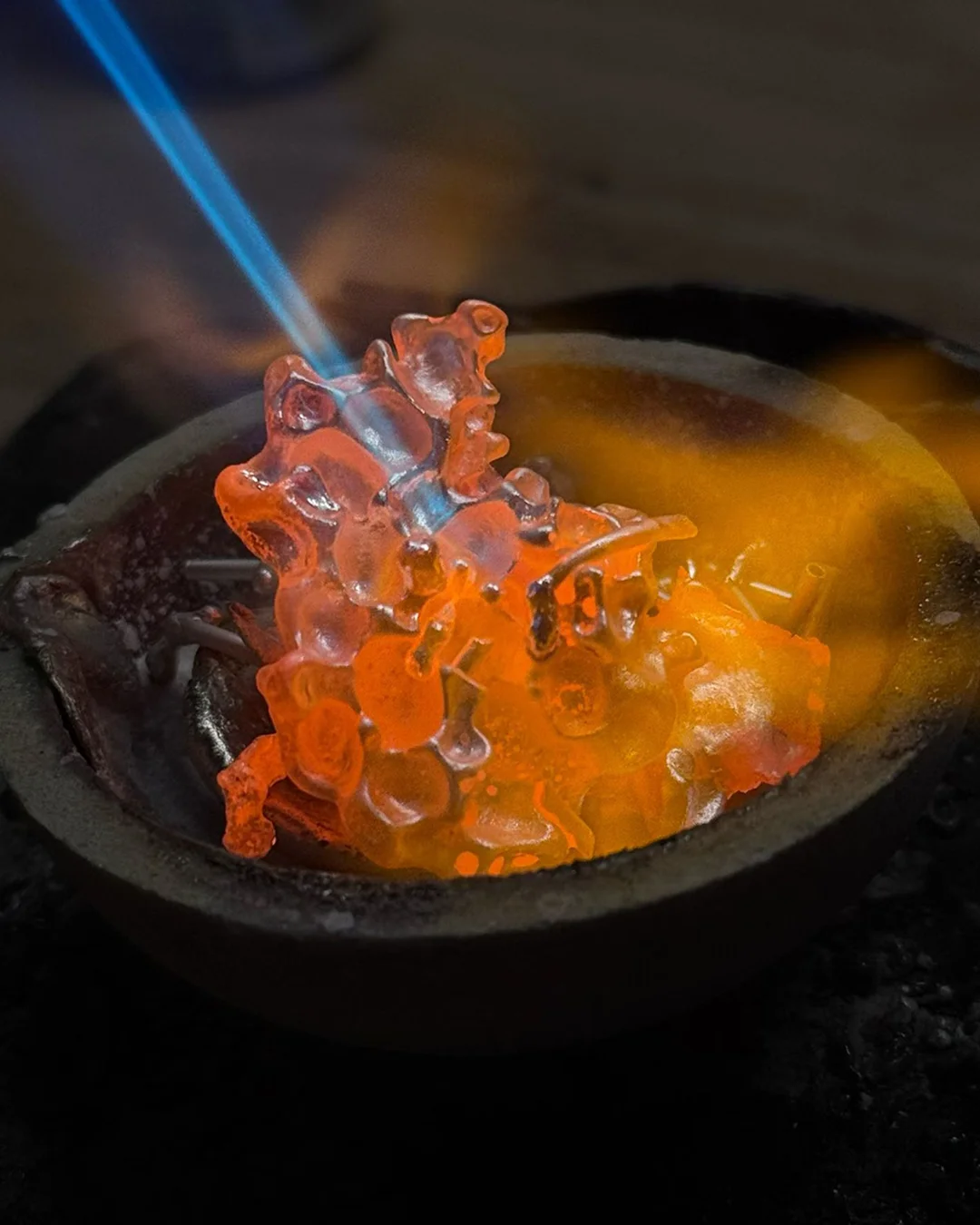
Lost-wax casting begins with a wax model. The original form is carved or sculpted, then encased in a mold. When heated, the wax melts away, leaving a hollow space for molten metal. The piece that emerges is rough at first. It still needs cutting, filing, sanding, and finishing.
This method is especially suited to organic forms: petals, shells, uneven textures, sculptural bands, and shapes that feel grown rather than drawn with a ruler.
Metalsmithing, Forging, and Soldering
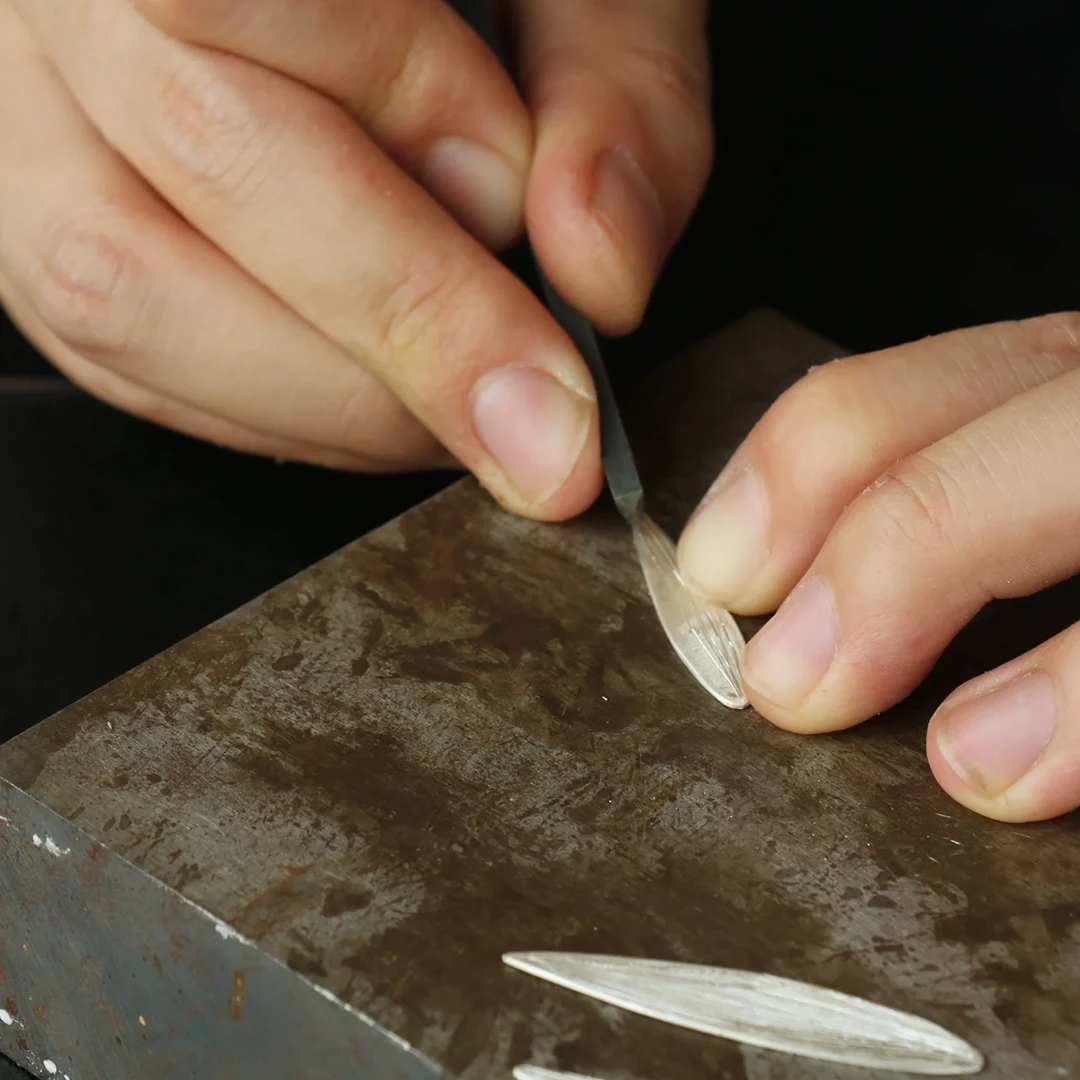
Many silver pieces are not only cast. They are cut, bent, hammered, annealed, soldered, and joined at the bench.
This is the most familiar language of traditional jewelry making: metal under heat, metal under pressure, metal slowly persuaded into structure. A hammer can stretch or curve a form. A torch can soften silver, join two parts, or prepare a surface for the next step. Pliers, saws, mandrels, files, and small steel tools all leave their own kind of memory.
Forging does not always mean dramatic force. Often, it is small repeated pressure. A ring band is rounded. A curve is corrected. A stem is made less stiff. The piece gains its body before it gains its shine.
A line is not only drawn. It is cut, softened, corrected.
Hand Finishing
Casting is only the beginning. The slow work often happens after.
Edges are refined. Surfaces are softened. Tool marks are considered. Some marks are removed. Some are allowed to stay. A final finish can change the entire emotional temperature of a piece: polished silver catches light sharply; matte silver feels quieter; oxidized silver holds shadow in the low places.
Stone Setting
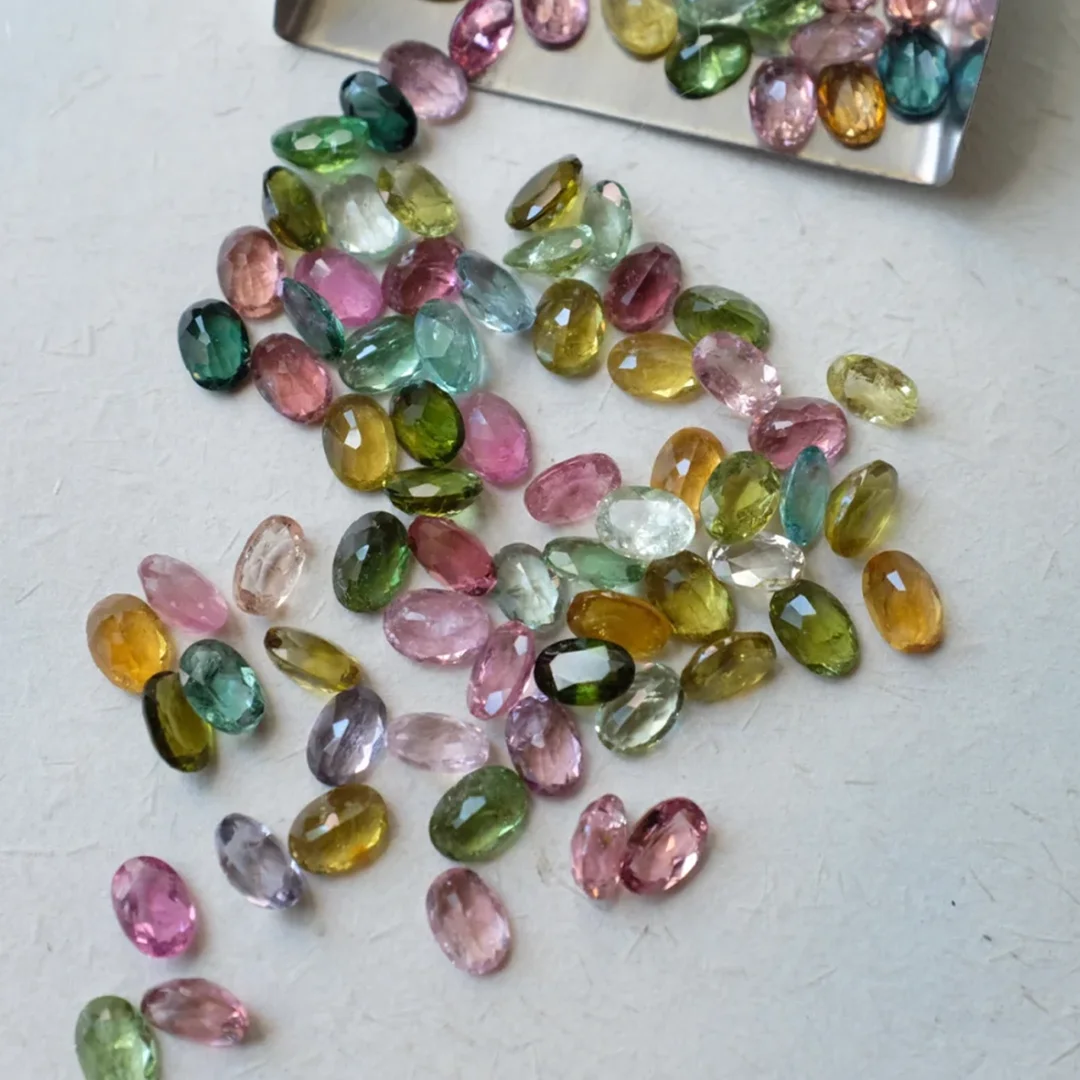
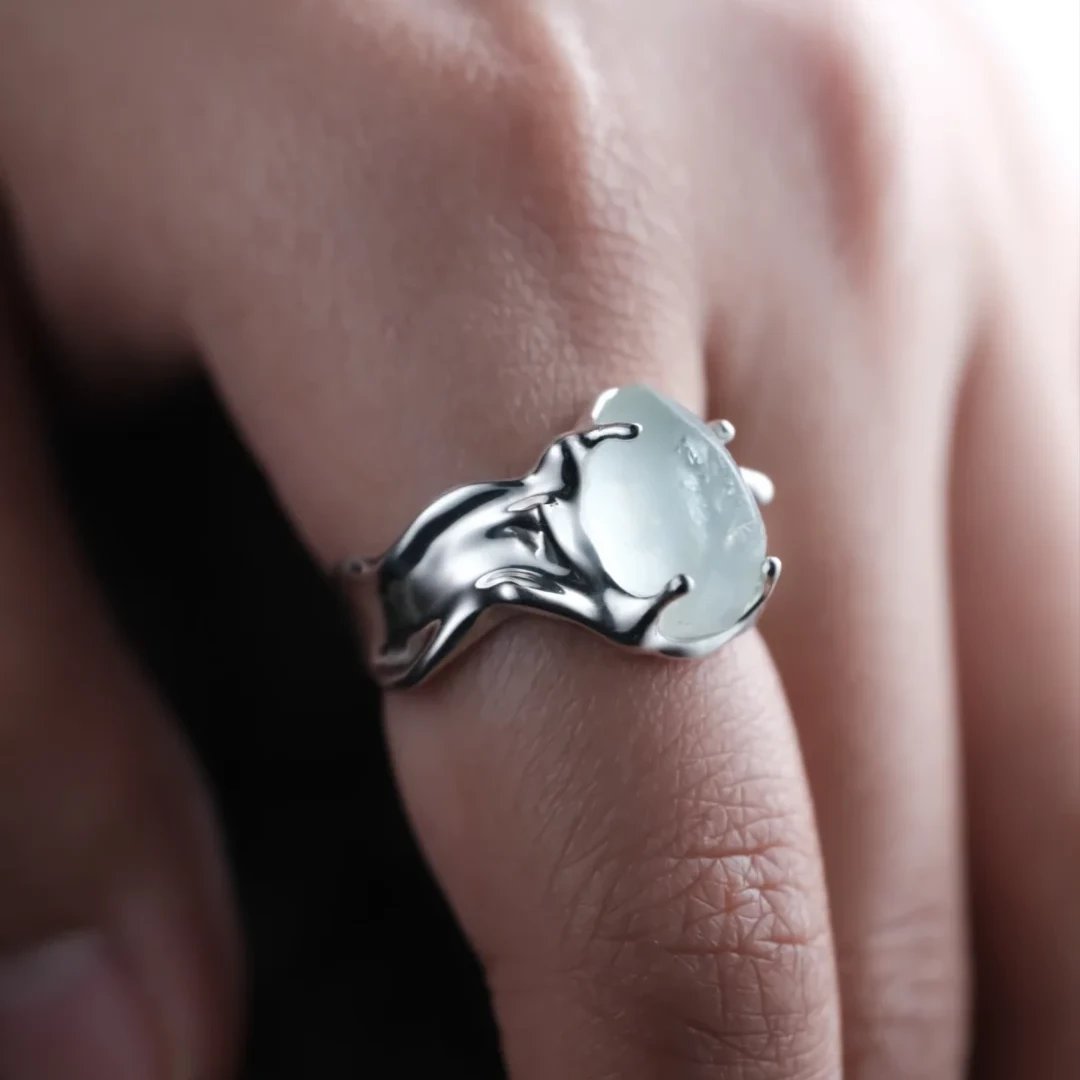
In artisan jewelry, stones are often chosen for character rather than strict uniformity. A natural gemstone may have an irregular shape, a small inclusion, a shift in tone, or a surface that makes the setting more difficult.
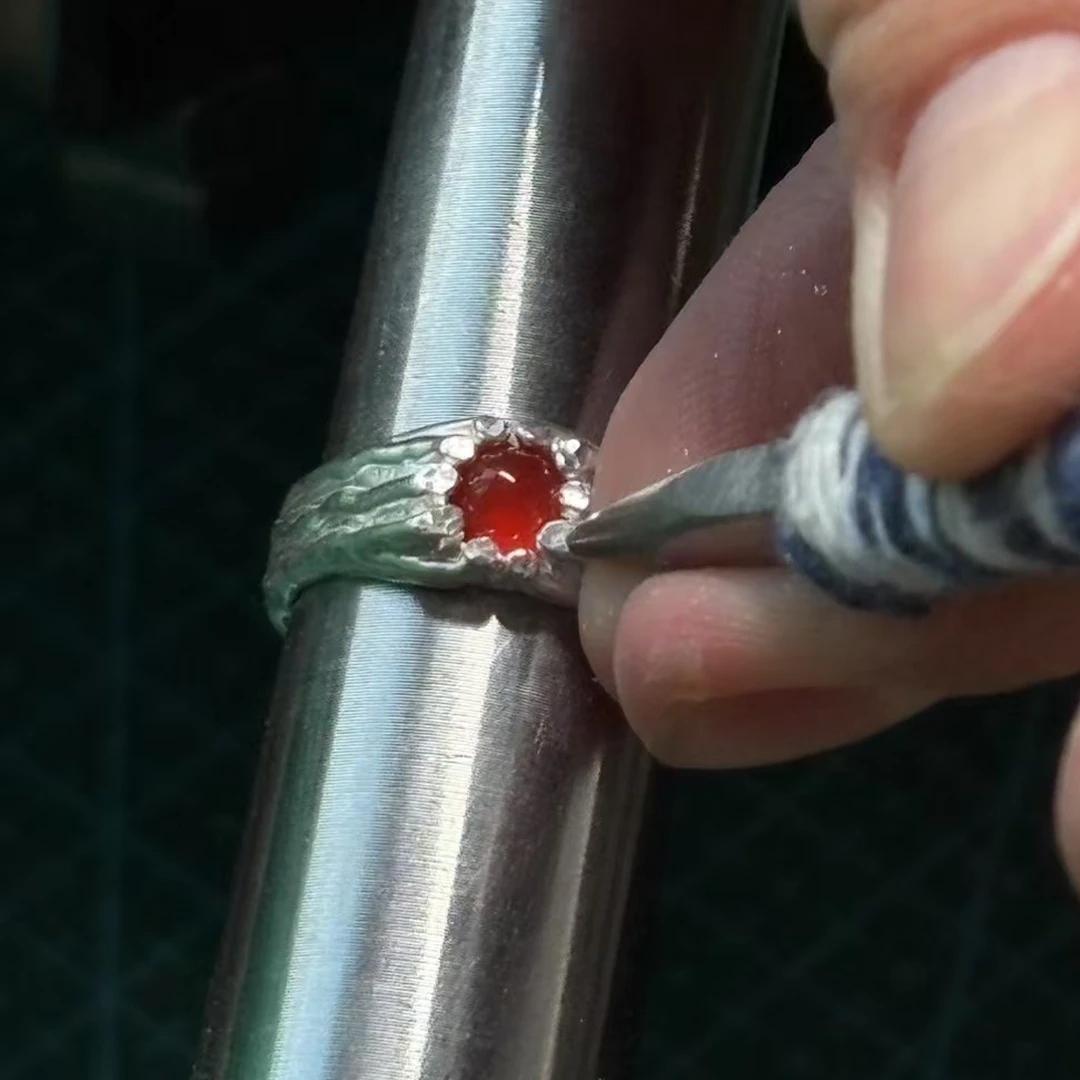
That difficulty is part of the work.
The setting must respond to the stone, not force it into obedience.
For gemstone names, care, and identification, the GIA Gem Encyclopedia is a useful reference. In the studio, though, a stone is also judged by feeling: how it catches light, how it sits in silver, what kind of quiet it brings to the piece.
Hand Carving and Texture
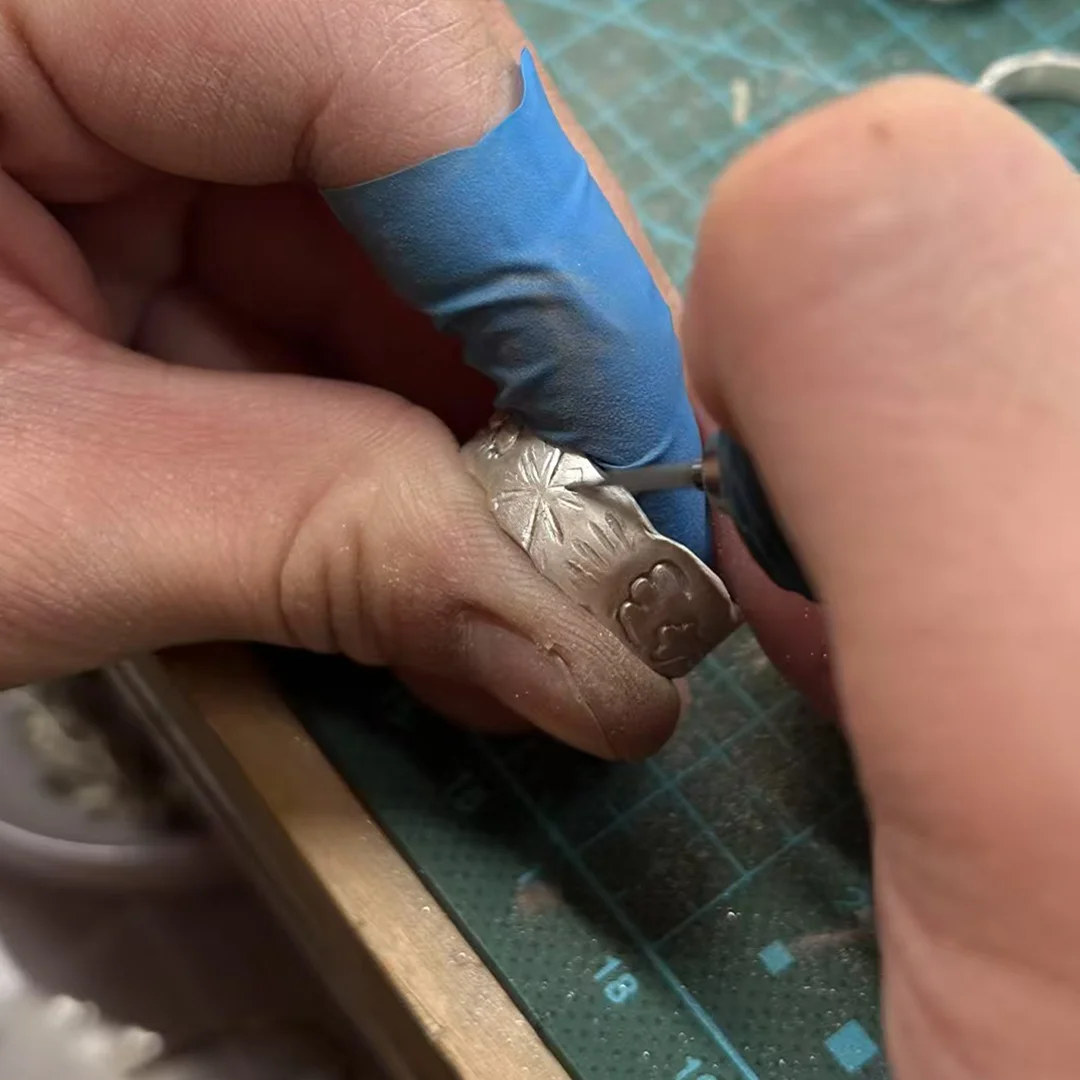
Some pieces begin as hand-carved wax. Others are shaped directly in metal. In either case, texture becomes a language. A hammered mark, a carved line, a shell-like ridge, a petal vein, a softened corner — these details make the surface feel alive.
Good artisan jewelry does not need to announce that it was made by hand.
The surface tells you.
Materials Say Something Too
Materials are never neutral.
S925 sterling silver, 990 pure silver, and 999 fine silver all behave differently under the hand.
S925 sterling silver is 92.5% silver, the working standard for silver jewelry worldwide. It is harder than pure silver, so it holds detail and takes daily wear without losing its shape easily.
990 pure silver is 99% silver. It is softer, warmer in tone, and often suited to quieter botanical forms where small surface changes matter.
999 fine silver is 99.9% silver. No plating. The surface is real throughout. It is softer than the others, which is why it suits sculptural and organic work. The matte surface shifts with wear in a way that sterling does not.
990 and 999 silver are rarely used in fast-fashion jewelry because they are softer, harder to control, and less suited to mass production. In small-studio work, that difficulty is not a flaw. It is what lets the metal keep warmth, texture, and the mark of the hand.
Clear material language matters. In the U.S. market, the jewelry and precious metals guides in 16 CFR Part 23 are one reference point for how silver and other precious materials should be described.
This is why a material choice is also a design choice.
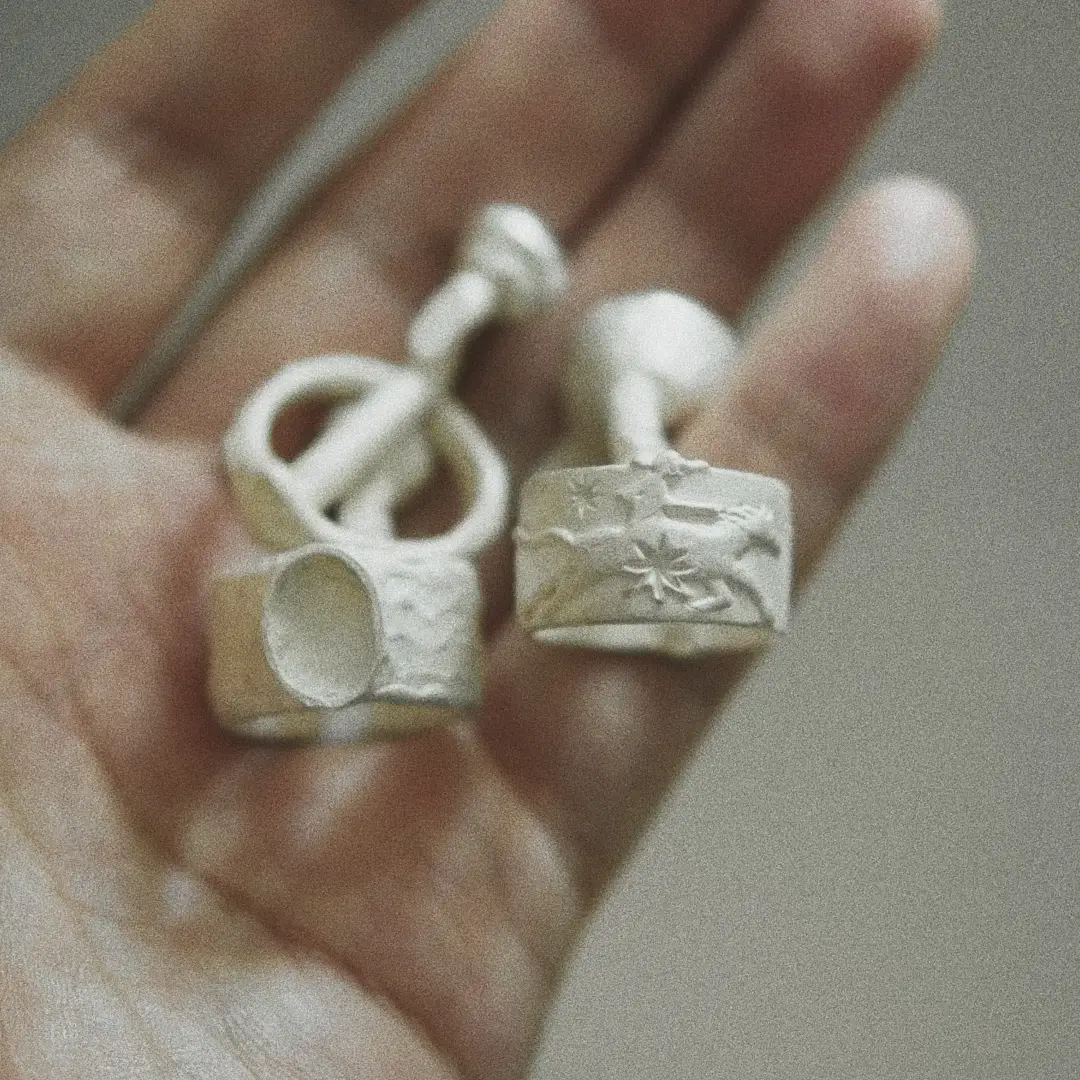
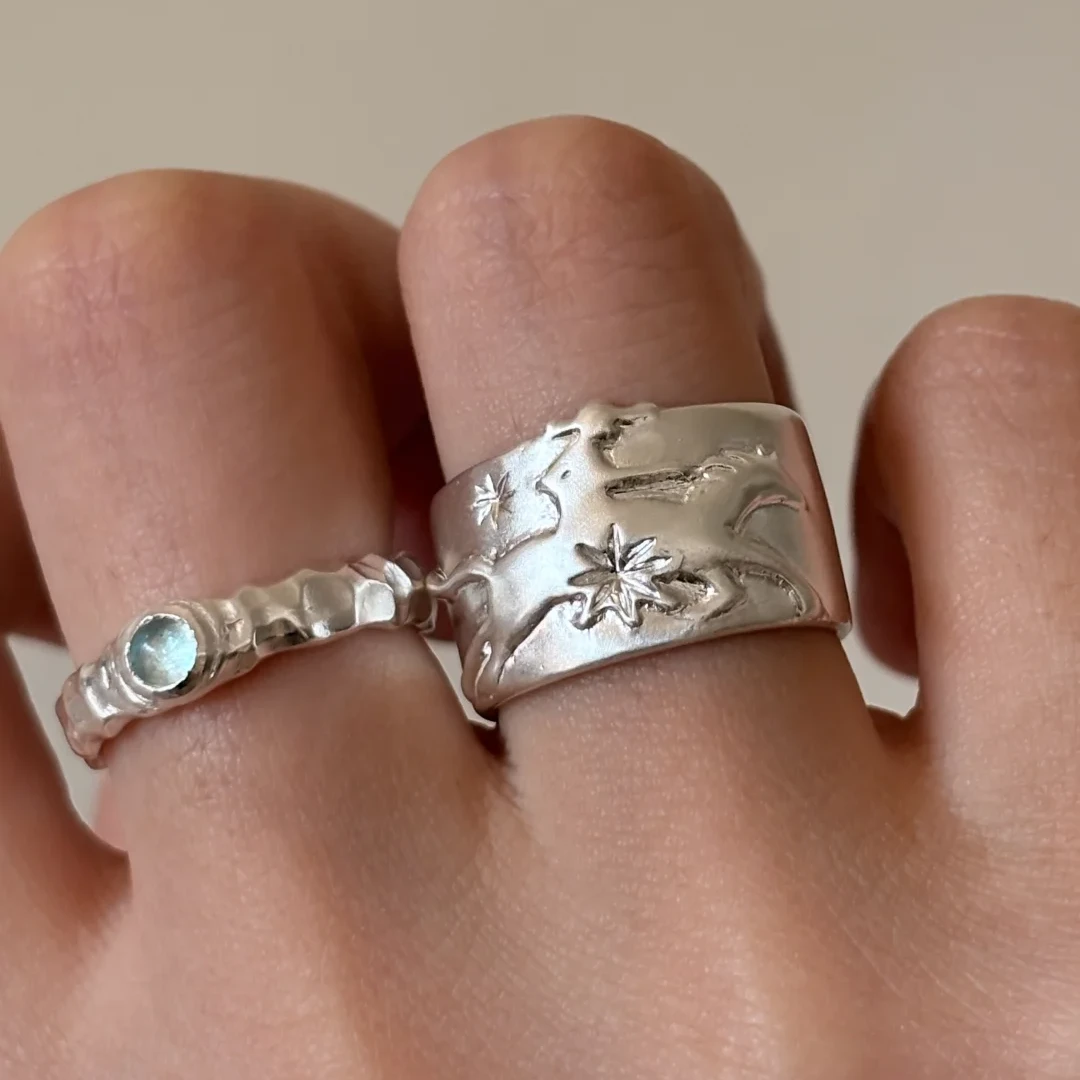
A ring made in 999 fine silver will not behave like a plated fashion ring. It will pick up marks. It will soften with the wearer. It will age into itself.
Wear it. Let it change.
How to Recognize Artisan Jewelry
A piece does not become artisan because a product page says so. Look closer.
Start with the surface. Is every line too identical, too polished, too erased to hold a trace of the process? Or are there small decisions visible in the texture?
Look at the material description. Real silver should be named clearly: S925 sterling silver, 990 pure silver, 999 fine silver. If a piece is plated, that should be clear too.
Look at the stone. Natural gemstones often vary in color, pattern, and shape. A serious maker will not hide this variation. They will explain it.
Look at the scale of production. Small-batch and made-to-order work usually carries a longer timeline. Waiting is not always a problem. Sometimes it is the point.
Look at the design language. Does the piece feel like it was made to chase a trend, or does it carry a quieter internal logic?
Good artisan jewelry has a reason for being shaped the way it is.
How to Choose Artisan Jewelry
Choose the piece you keep looking at after the obvious one has already passed.
That sounds simple, but it is a useful test.
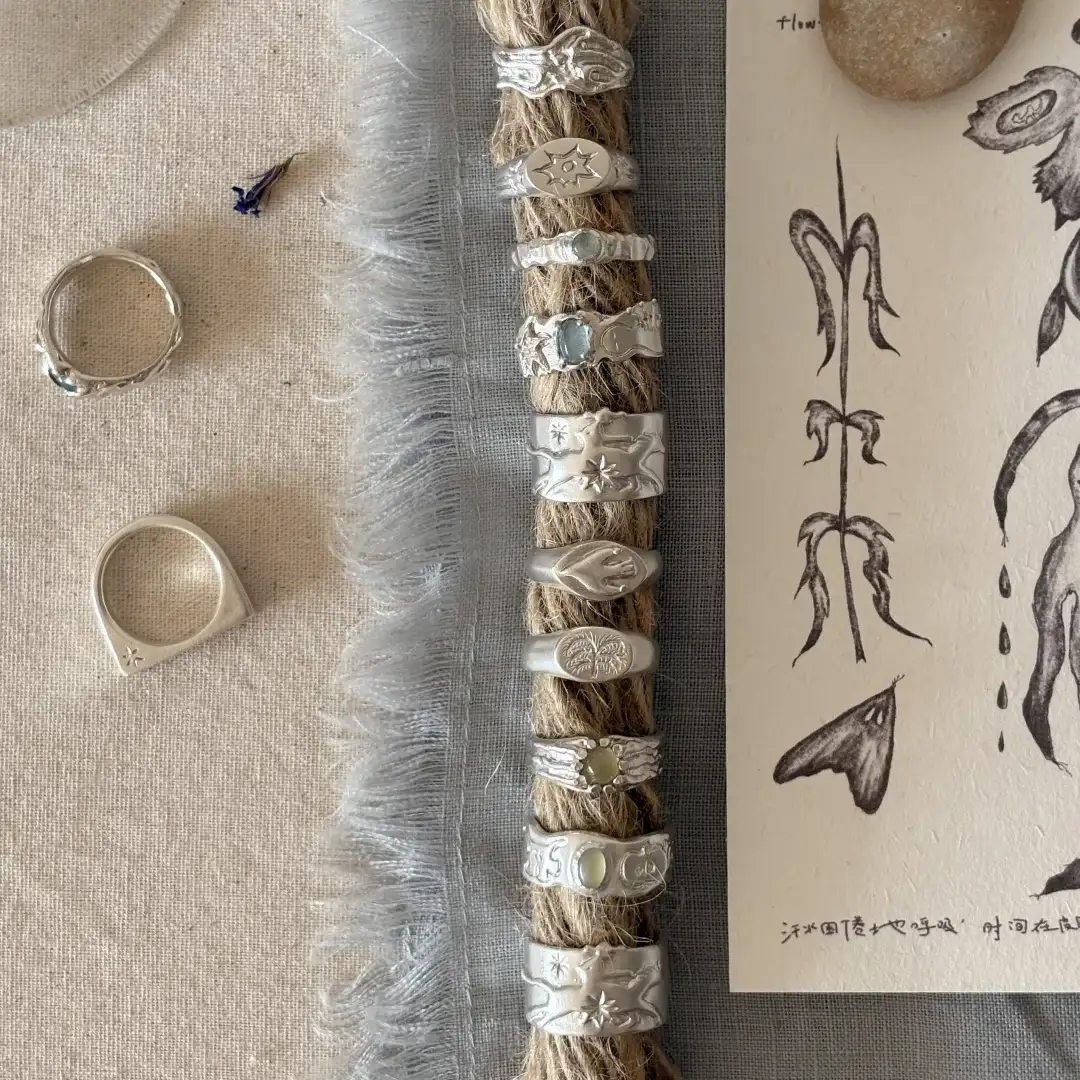
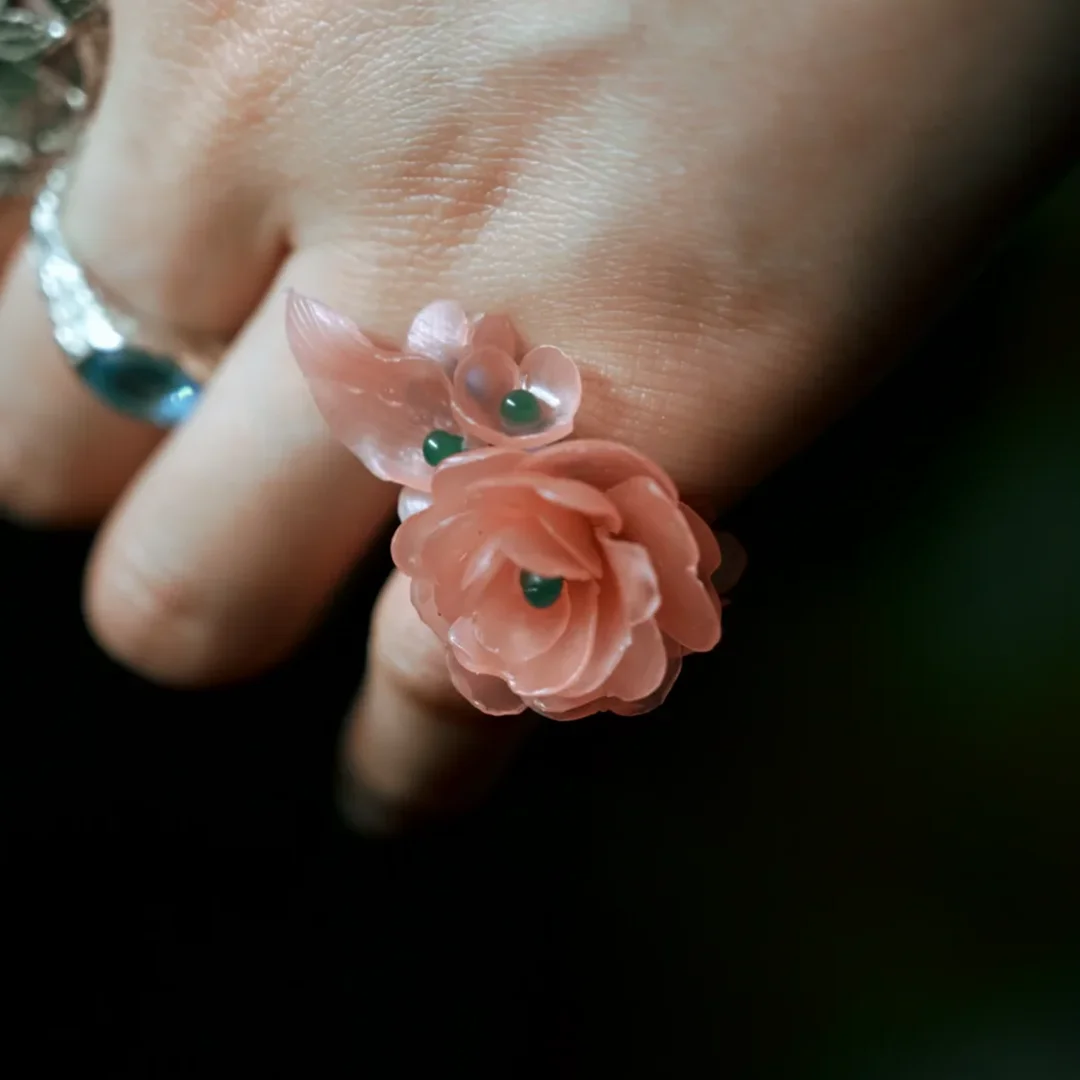
Artisan jewelry is not always the loudest object in the room. Sometimes it asks for a slower kind of attention. A ring may look plain at first, then reveal a shell texture along the side. A pair of silver earrings may seem minimal, then shift like wings when worn. A flower ring may not read as “floral” in a decorative way, but as a small study of how a stem bends.
When choosing a piece, ask:
Does the material fit the way it will be worn?
Does the form feel personal without needing an explanation?
Can the piece age well, both physically and emotionally?
Is there enough detail to return to?
Jewelry worn often becomes part of the body’s daily rhythm. It touches a desk, a cup, a coat sleeve, a door handle. It gathers small marks from ordinary life.
Choose something that can hold those marks without losing itself.
What Artisan Jewelry Means at Lazesoul
Lazesoul works with independent designers, makers, and small studios from China’s independent artisan community. The relationship is collaborative, not anonymous: a shared language of silver, natural forms, cultural memory, and slow work.
Not every Lazesoul piece arrives through the same path. One designer may carve a wax form until a petal holds its curve. Another may begin with a digital model, then return the cast silver to the hand. Another may follow the irregular edge of a stone, a shell, a bird, or a private symbol.
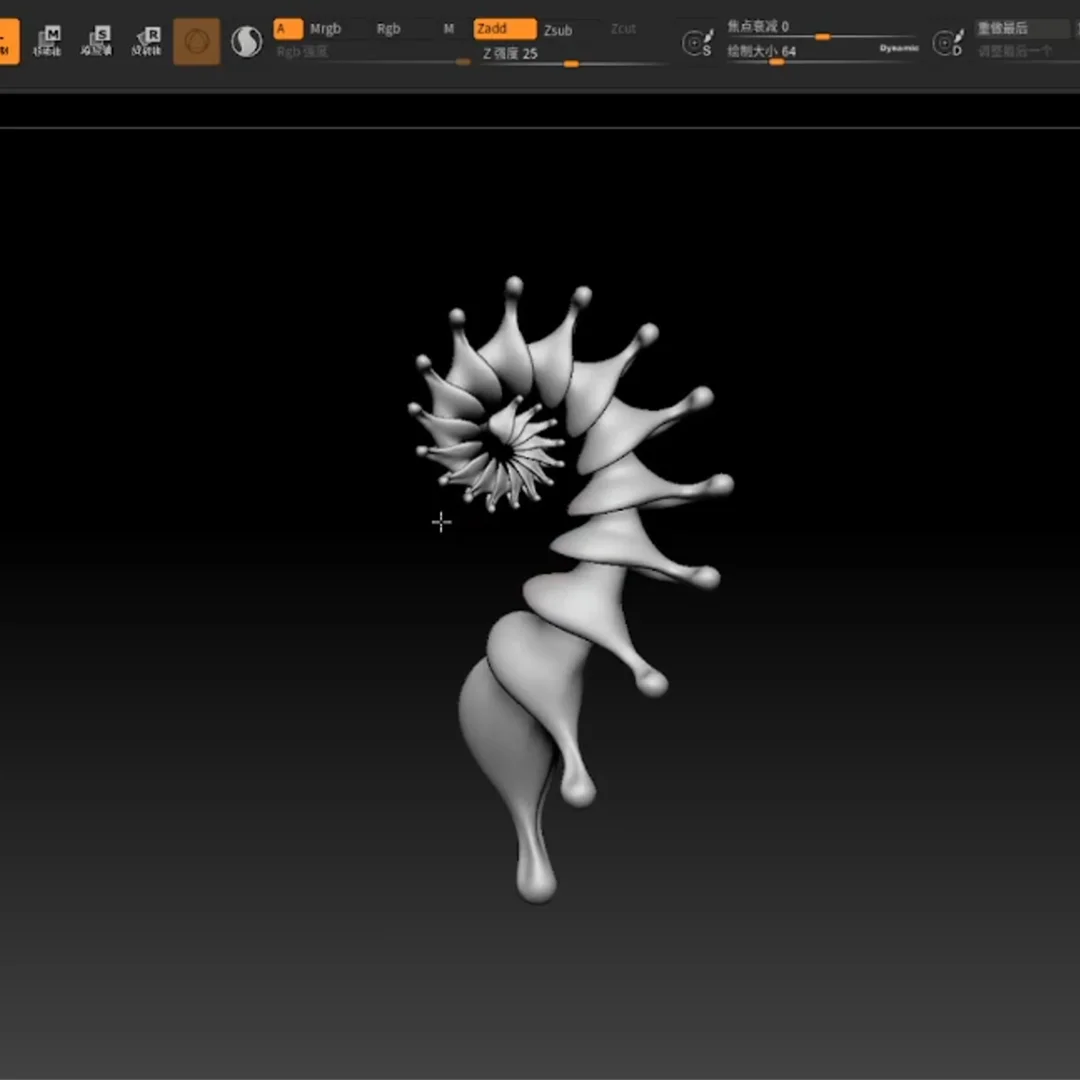
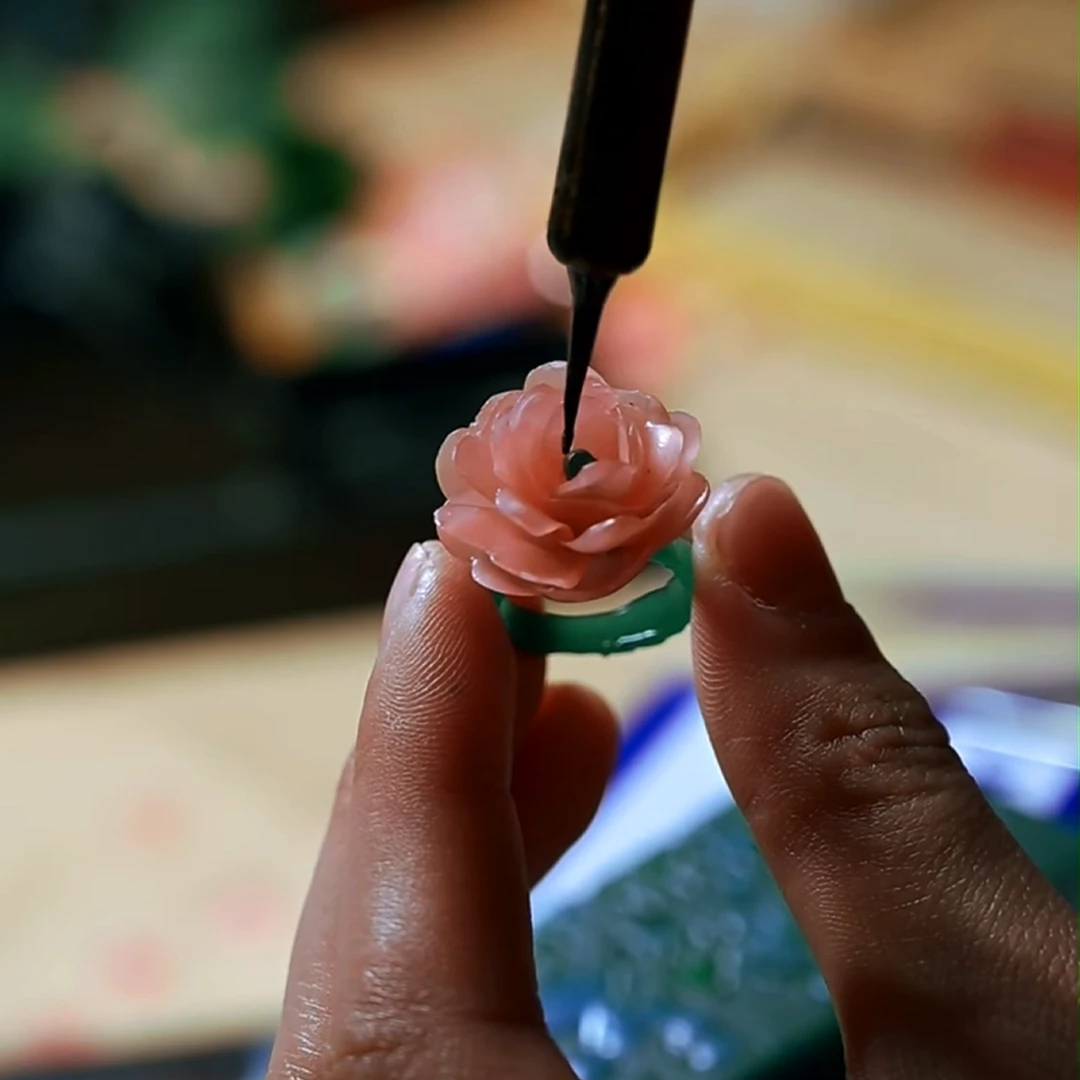
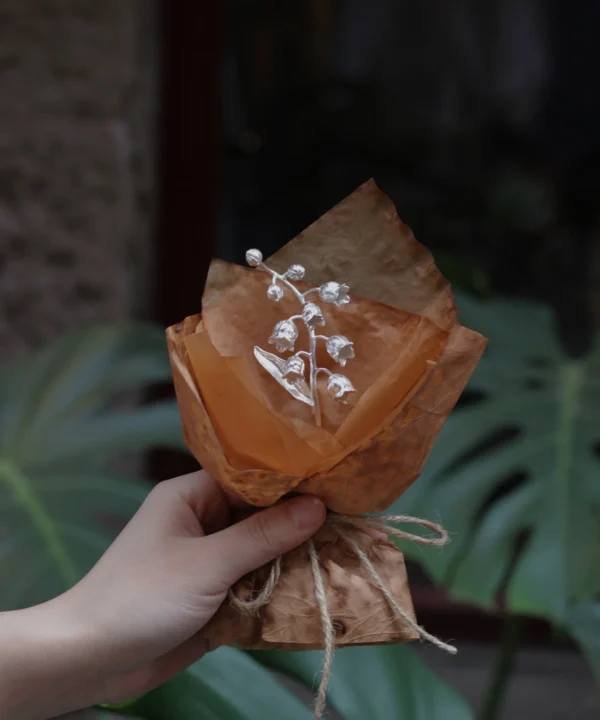
Each designer keeps a different rhythm. Pure silver botanicals ask for patience: petals, stems, leaves, flowers that feel gathered rather than made. 999 fine silver and natural stone ask for another kind of restraint, where weight, surface, and asymmetry carry the feeling of the piece.
That difference is not a product category. It is authorship. A handmade silver flower ring and a textured 999 fine silver band do not need to speak in the same voice. They only need to stay honest to the hand that shaped them.
The quiet test is simple: can the piece keep its own presence after the trend has moved on?
That is the kind of work Lazesoul chooses to stand beside.
Explore Artisan Silver Jewelry
For pieces that carry the same slow-studio language, explore silver jewelry shaped through texture, natural forms, and hand finishing.

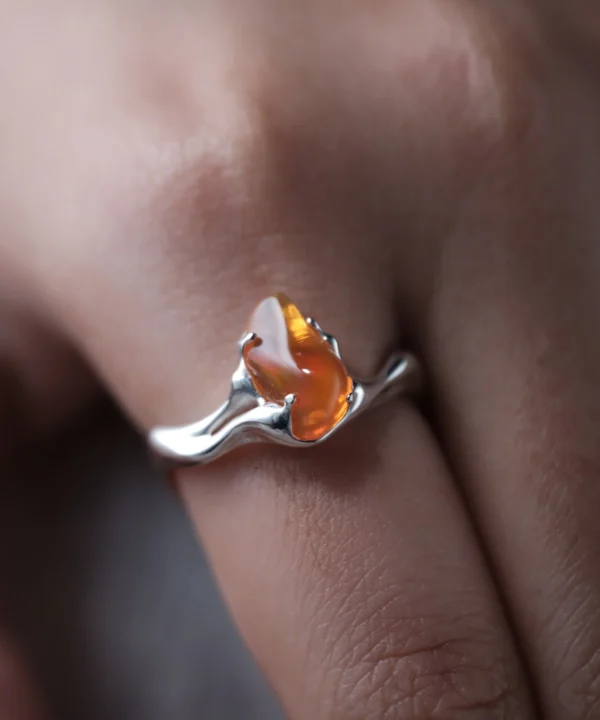
Custom Gemstone Rings – One of a Kind Handmade Silver Ring
Price range: $258.00 through $358.00 Select options This product has multiple variants. The options may be chosen on the product page- Sale!
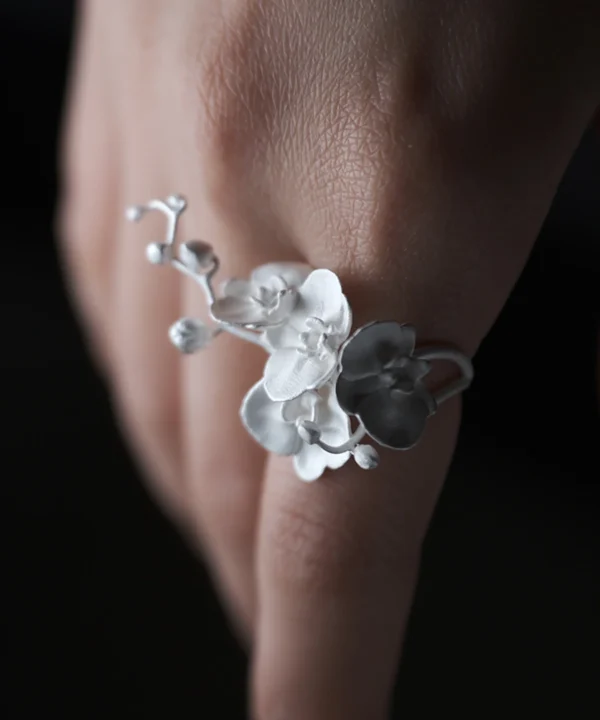
Orchid Ring | S925 Sterling Silver Adjustable Design
Original price was: $198.00.$168.00Current price is: $168.00. Select options This product has multiple variants. The options may be chosen on the product page
Artisan Jewelry Is Not About Industrial Sameness
Industrial sameness has its own logic.
Artisan jewelry is closer to precision than sameness. The maker is still disciplined. The setting still needs to hold. The ring still needs to fit. The earring still needs to sit comfortably. Craft is not an excuse for carelessness.
But the goal is not to erase every trace of the hand.
A softened edge can be intentional. A matte surface can be more honest than a mirror polish. A natural stone can be more compelling because it is not identical to any other stone. A handmade flower can hold the memory of the real flower without pretending to be an exact copy.
The hand is not a defect.
It is the reason the piece has a pulse.
A Slower Way to Wear Jewelry
Artisan jewelry invites a different relationship with what you own.
Not more pieces. Better attention.
A silver ring worn daily begins to record its life with you. A pendant becomes familiar by touch before sight. An ear cuff finds its place on the ear. A flower made in silver stops belonging only to spring.
That is the quiet promise of artisan jewelry.
It is made by someone. Then it becomes yours.
Wear slow. Wear soul.
FAQ
What is artisan jewelry?
Artisan jewelry is jewelry made by skilled makers or small studios where human craft, design judgment, and hand finishing are central to the piece. It is often made in small batches or made to order, rather than mass-produced.
Is artisan jewelry the same as handmade jewelry?
Not always. Handmade jewelry means hands were involved in making the piece. Artisan jewelry usually suggests a higher level of craft, authorship, and design intention. A piece can be handmade without feeling truly artisan.
Why is artisan jewelry more expensive than mass-produced jewelry?
Artisan jewelry usually takes more time. A maker may carve, cast, file, polish, set stones, and finish each piece individually. The price reflects skilled labor, material choices, and smaller-scale production.
Is artisan jewelry better for everyday wear?
It depends on the material and design. S925 sterling silver is often a strong choice for daily wear because it holds shape well. Softer metals like 990 or 999 silver can be worn often too, but they may show marks more easily. Those marks can become part of the piece.
How can you tell if jewelry is truly artisan?
Look for clear material descriptions, visible design decisions, small-batch or made-to-order production, natural variation, and process details. Good artisan jewelry usually explains how and why it was made, not just what it looks like.