
Layering necklaces is less about following a formula than giving each piece enough room to speak. Begin with one necklace you want to notice, place the next focal point above or below it, then change either the length, texture or visual weight of every new line. A bead strand beside a fine silver chain will usually read more clearly—and move more independently—than two nearly identical chains resting in the same place.
That is the short answer to how to layer necklaces. The longer answer lives in the details: where the pendants actually fall, how a stack relates to your neckline, and what happens when you walk rather than stand still in front of a mirror.
This necklace layering guide uses real combinations from our handmade necklace collection, but the principles work with pieces you already own. The same idea applies when you layer jewelry more broadly: give every object a role, then leave enough quiet space for it to be seen.

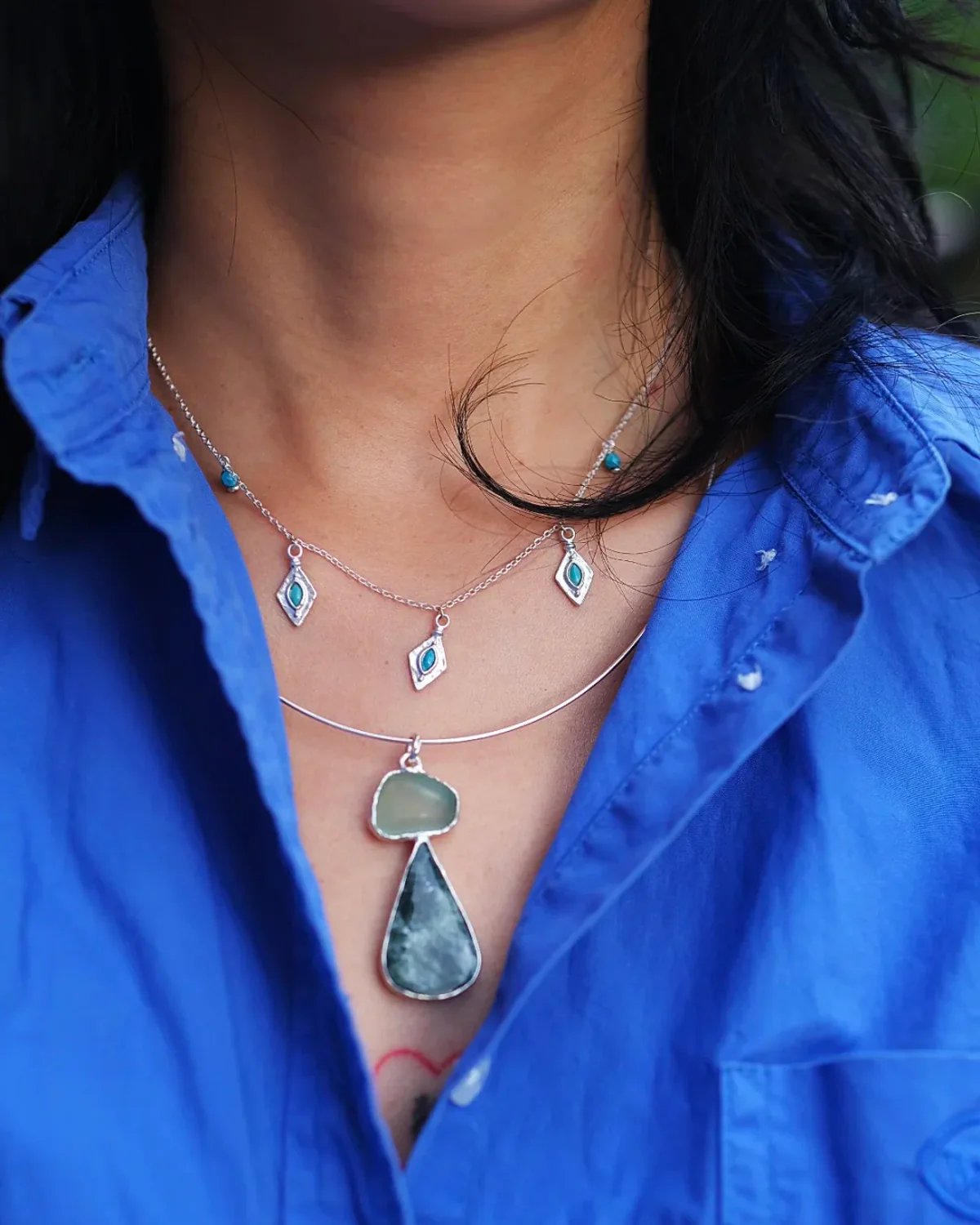
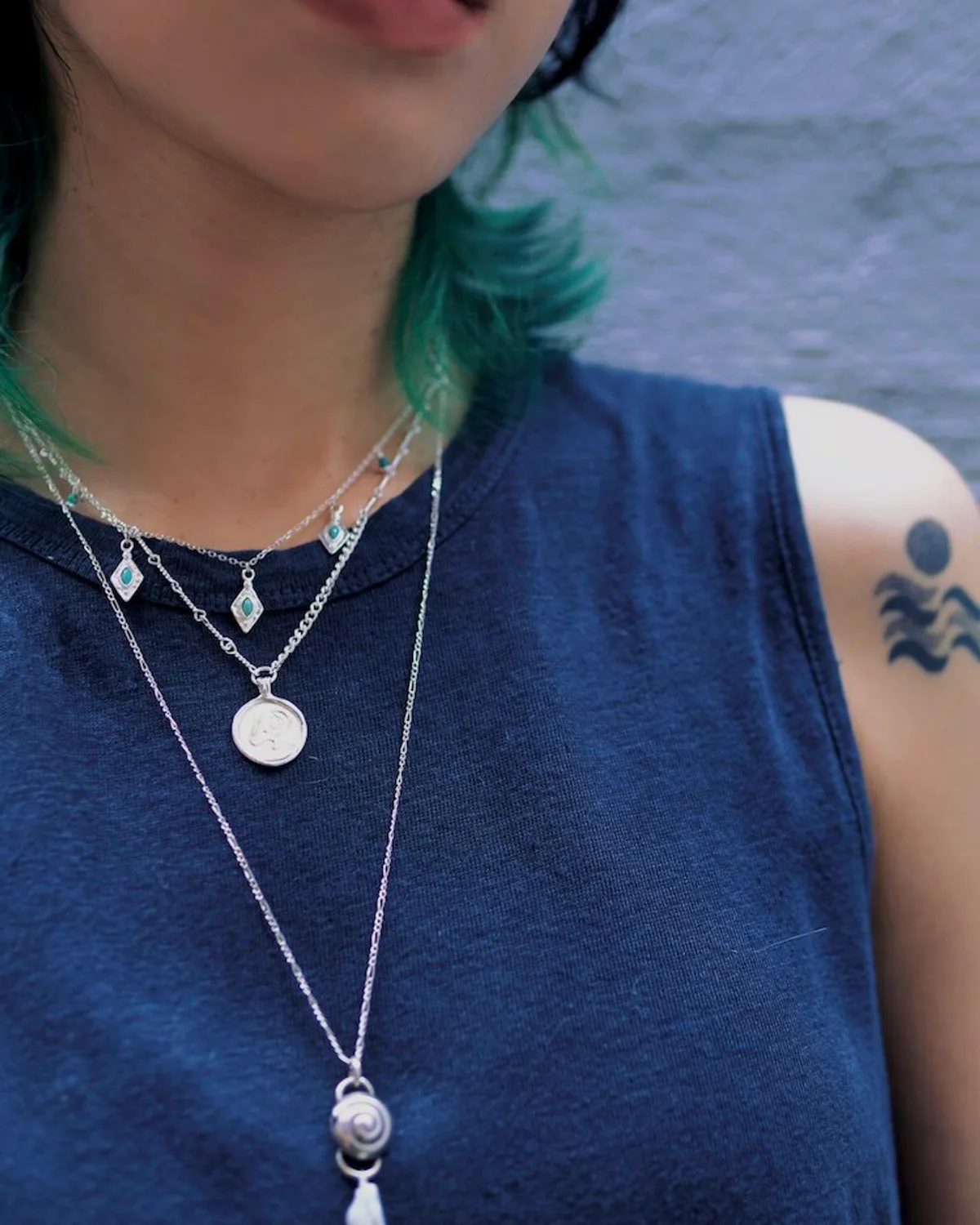
A close bead strand, a moving line of turquoise charms and one grounded pendant: three different jobs rather than three competing necklaces.
The quick way to build a necklace stack
If you are standing at the mirror and want a simple starting point:
- Choose the anchor. This is the pendant, bead strand or sentimental piece you most want to wear.
- Add a different focal-point height. Look at where the pendant or centre bead lands—not only the chain measurement.
- Change the texture. Pair a fine chain with beads, leather cord, pearls or a more sculptural link.
- Repeat one element. A shared colour, silver tone or organic shape makes the stack feel related.
- Leave some quiet space. Two clearly separated necklaces often look more intentional than four compressed into one band.
Before leaving home, turn your shoulders, sit down and walk a few steps. If every pendant slides into the same place, revise the stack while you still have a mirror.
Start with necklace length—but measure the drop
Searches for the “best necklace lengths for layering” often suggest fixed two-inch steps. That can be useful, but it is only a starting point. A 45 cm chain with a 3.5 cm pendant may finish lower than a plain 50 cm chain. Beads also change the curve: a substantial strand can sit closer to the neck than a fine chain with the same measured circumference.
Use these ranges as roles, not rules:
| Role in the stack | Useful starting range | What it does |
|---|---|---|
| Short layer | 40–42 cm / 16–17 in | Holds a line of small charms, beads or a light chain near the collarbone |
| Middle layer | 45–50 cm / 18–20 in | Creates a bridge and usually carries a small-to-medium pendant |
| Anchor layer | 55–65 cm / 22–26 in | Gives the composition a lower stopping point and room to breathe |
Your neck size, body proportions, pendant length and clothing will change every position. When learning how to layer necklaces with different lengths, compare the centre of each piece while worn. That visible vertical interval matters more than the number printed on a product page.

How to build a necklace stack, step by step
1. Choose one piece to lead
Every good necklace stack has a centre of gravity. It might be a long carved pendant, a strong collar-length strand or a tiny object with personal meaning. Start there instead of choosing three pieces at once.
If the anchor is long and sculptural, build upward with quieter pieces. If the anchor is a chunky bead necklace, let it stay close to the neck and place a finer pendant below. This is also the easiest way to layer a statement necklace: allow the statement to lead, then add no more than one restrained supporting line.
2. Separate the focal points
Two pendants can hang from different chain lengths and still collide if the lower pendant is tall or the upper chain has a deep curve. Put both necklaces on, find their visual centres and adjust from there. Extenders are useful because a one- or two-inch change can turn an overlap into a deliberate interval.
When you layer three necklaces, try to create three distinct stops rather than three evenly spaced chains. A short horizontal strand, a small middle pendant and a long vertical pendant make the eye travel naturally.
3. Mix structures, not just lengths
A stack becomes more legible when every necklace carries a different rhythm. Try one fine chain, one irregular bead strand and one cord. Or keep the material consistent—an all-silver necklace stack—while changing chain gauge, pendant scale and surface finish.
This is especially useful when learning how to layer silver necklaces. Silver does not need another metal to create contrast. Bright polish beside oxidised texture, a smooth chain beside hand-carved marks, or a narrow charm line beside one dense pendant can hold enough variation on its own.
4. Repeat a colour or shape
Contrast keeps the lines apart; repetition holds them together. A single turquoise note can move from a tiny charm to a bead and reappear in the long pendant. A spiral can answer a round pearl. The repetition does not need to be exact—it only needs to feel remembered.
5. Edit once
The most useful necklace layering tip is also the quietest: remove one piece and look again. If the stack still feels complete, leave it out. Layering should reveal the character of each necklace, not turn distinct work into surface noise.
Four necklace layering ideas from real pieces
These combinations are not matching sets. They are separate necklaces shown together so you can see what each layer contributes.
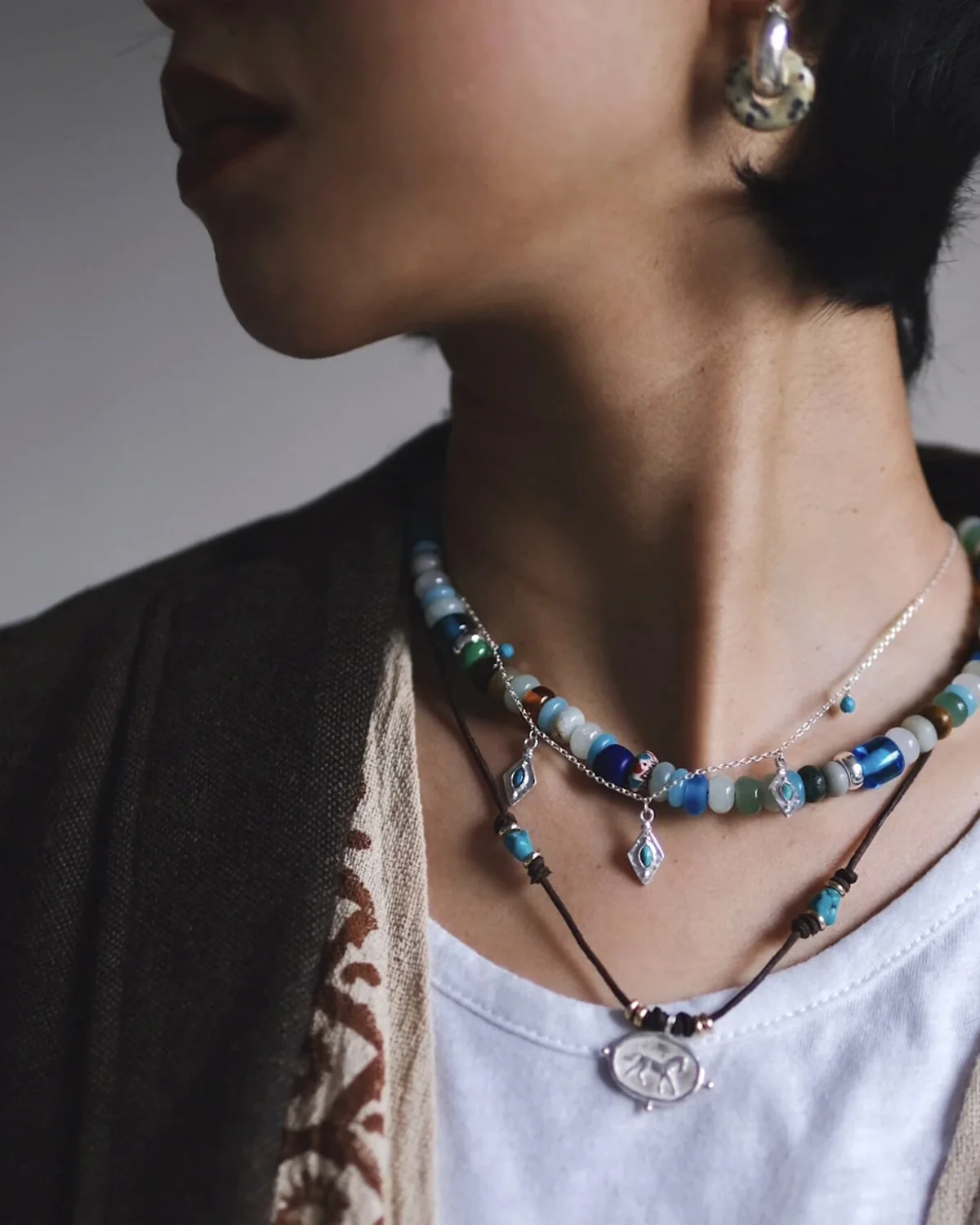
1. Beads + scattered charms + a long cord pendant
Start with Sea Made Still, a compact 42 cm amazonite and handmade-glass strand. Place Rhombus Feather below it by using part or all of its 5 cm extender. Its small turquoise-set drops form a moving middle line without becoming another solid band. Finish with the 48 cm, customisable Horse Necklace, whose darker cord and oval silver pendant give the stack a grounded end point.
Why it works: the three pieces differ in structure, not only in length. The upper beads feel gathered, the silver charms leave open space, and the leather cord draws one long line. The blue-green colour family makes the necklace stack coherent even though the materials change.
This is an easy formula for anyone asking how to layer chunky necklaces with delicate chains: place the substantial strand near the neck, keep the middle layer airy, and let one longer pendant restore vertical space.

2. Small turquoise charms + a larger stone + a botanical long layer
Use Rhombus Feather again as the short layer, then place Dragonfly in Memory at the middle focal point. A long Juniper Berry necklace brings a darker cord, botanical form and lower visual weight.

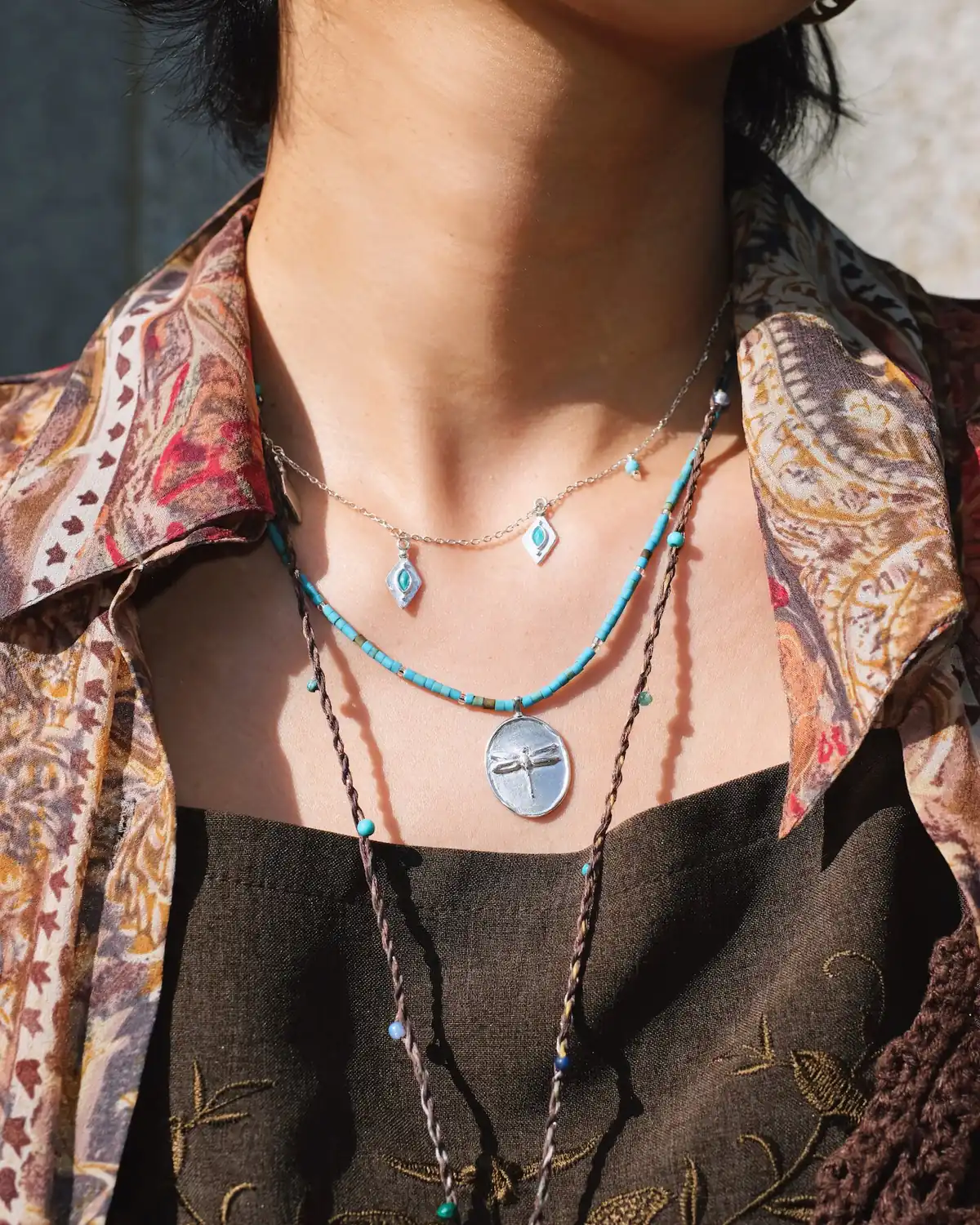
Why it works: the rhombus drops are small and repeated; the middle stone is larger and singular; the lowest pendant branches outward. The eye can distinguish each silhouette immediately. It is also a good example of long necklace styling: the bottom layer does not float alone—it completes a line started closer to the face.
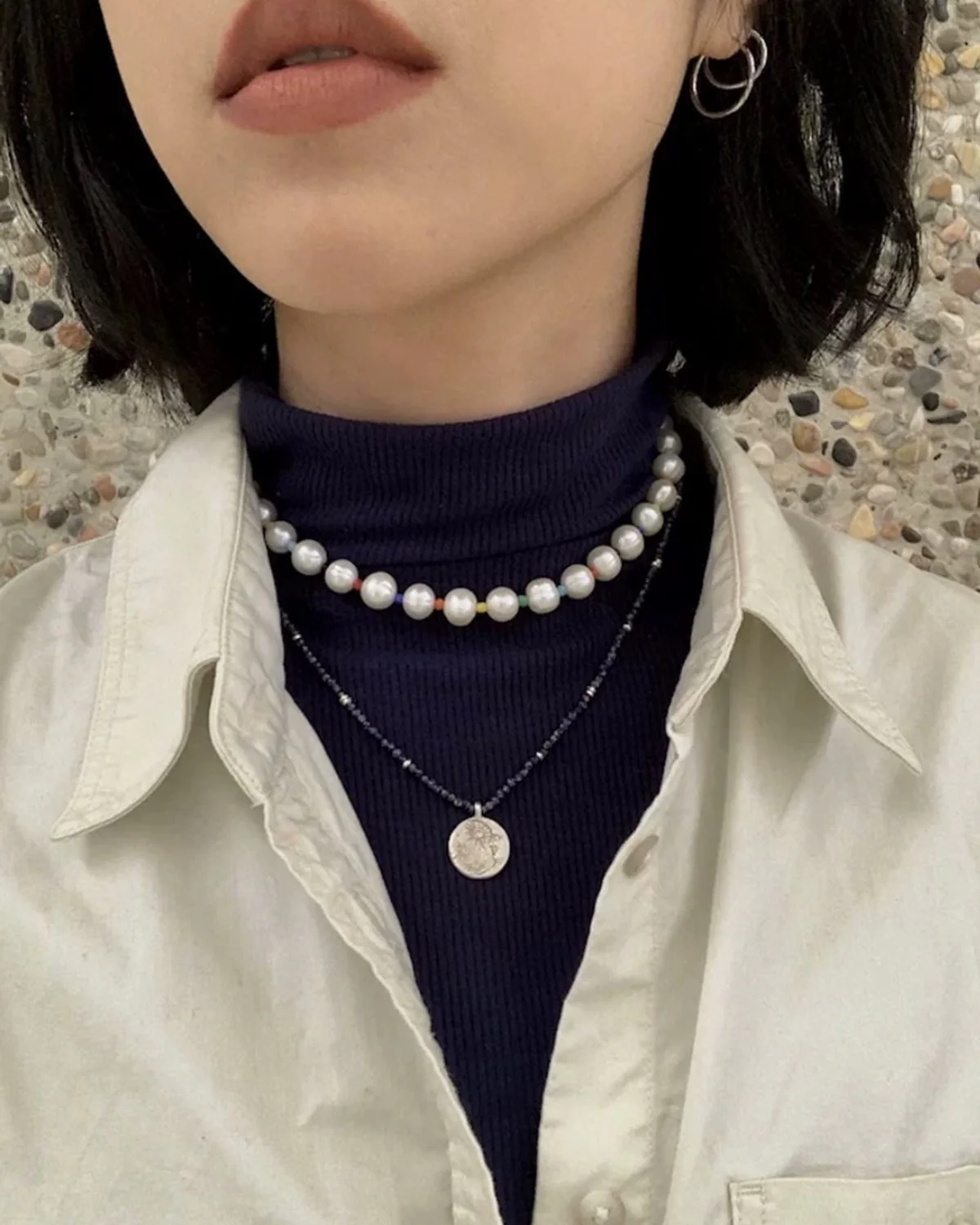
3. A 42 cm pearl strand + a 45 cm pendant chain
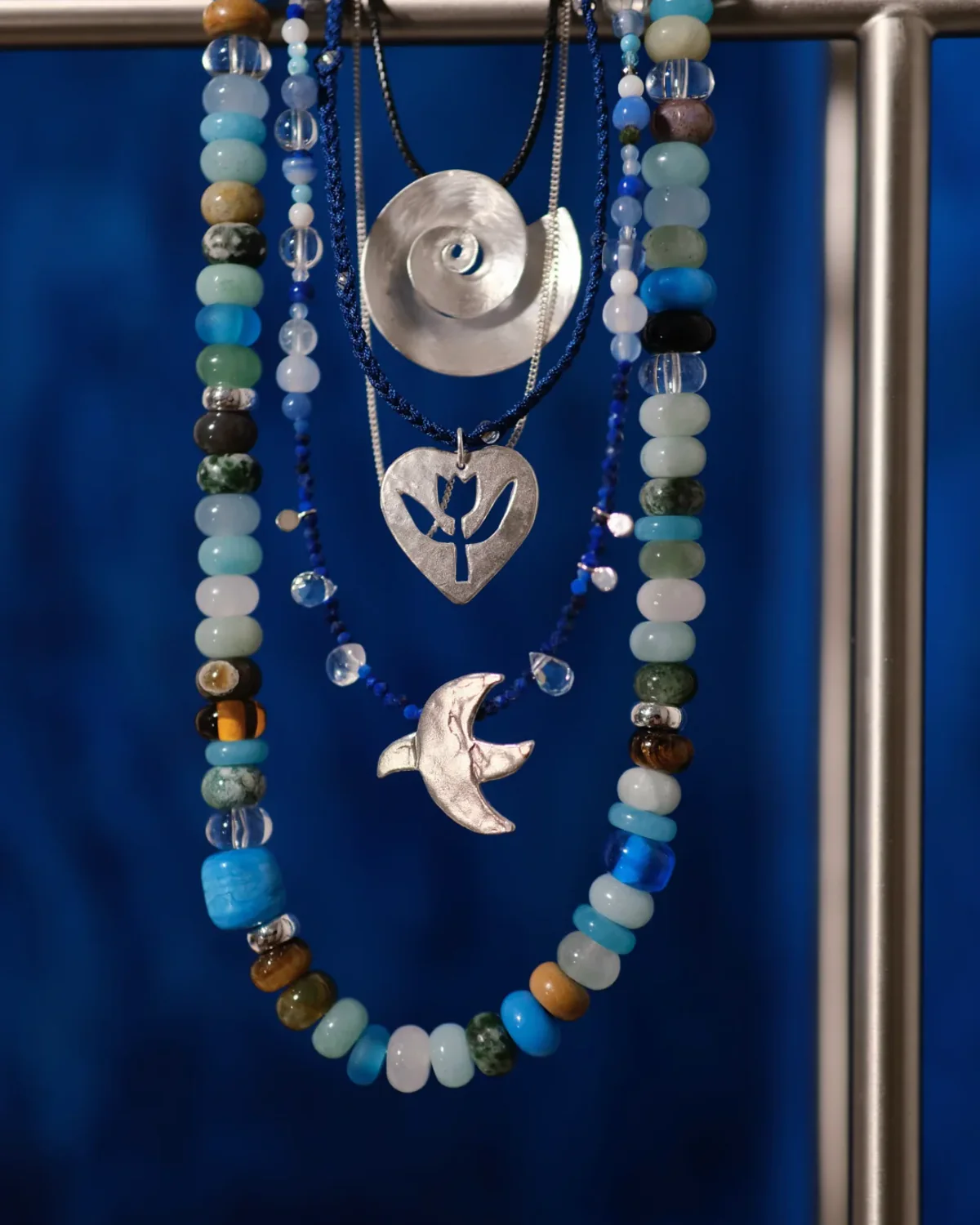
Siren Song sits at 42 cm, bringing lapis lazuli and one irregular baroque pearl close to the collarbone. Eternal Return uses a fixed 45 cm chain, but its 3.5 cm serpent pendant extends the lower focal point beyond the simple three-centimetre chain difference.

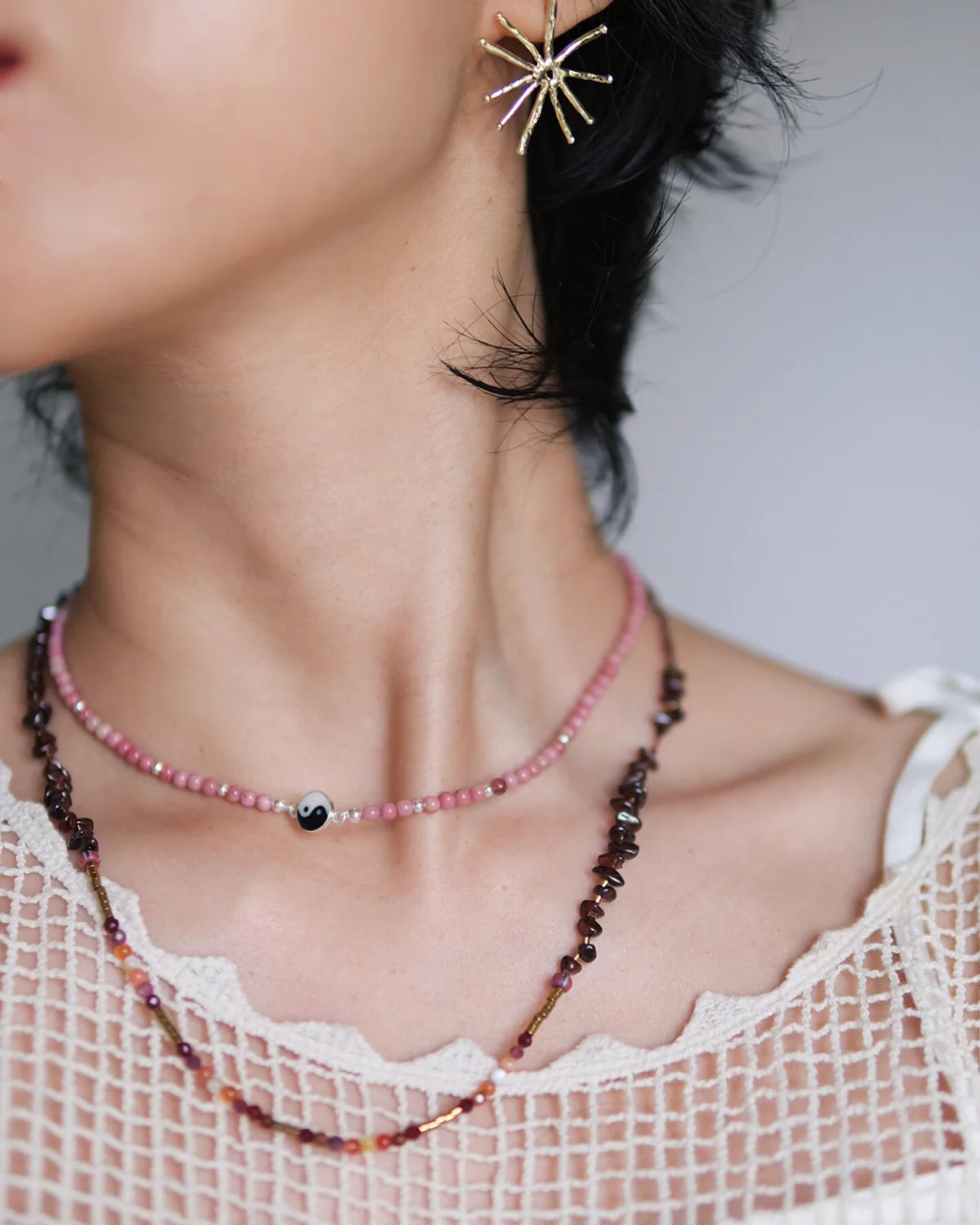
Why it works: the Siren Song and Eternal Return pairing turns a dark horizontal strand and a pale vertical pendant into two different directions. The second image shows that the principle travels: a fine rhodonite line can sit close to the neck while a dark cord supplies the lower movement. This is a useful answer to how to layer two necklaces when their measured lengths are close. Shape and drop can create separation that chain numbers alone do not.
4. Two bead necklaces at nearly the same length
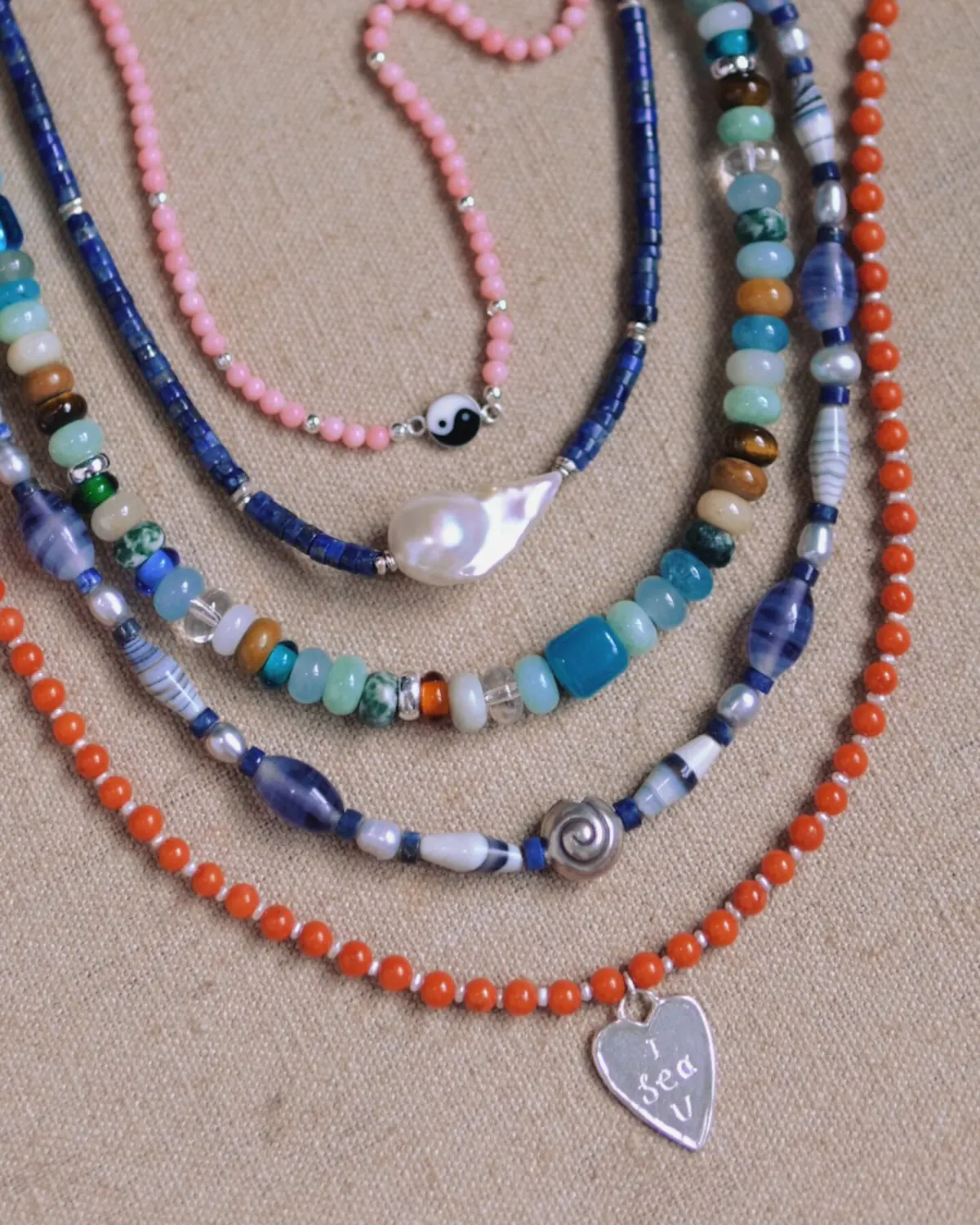
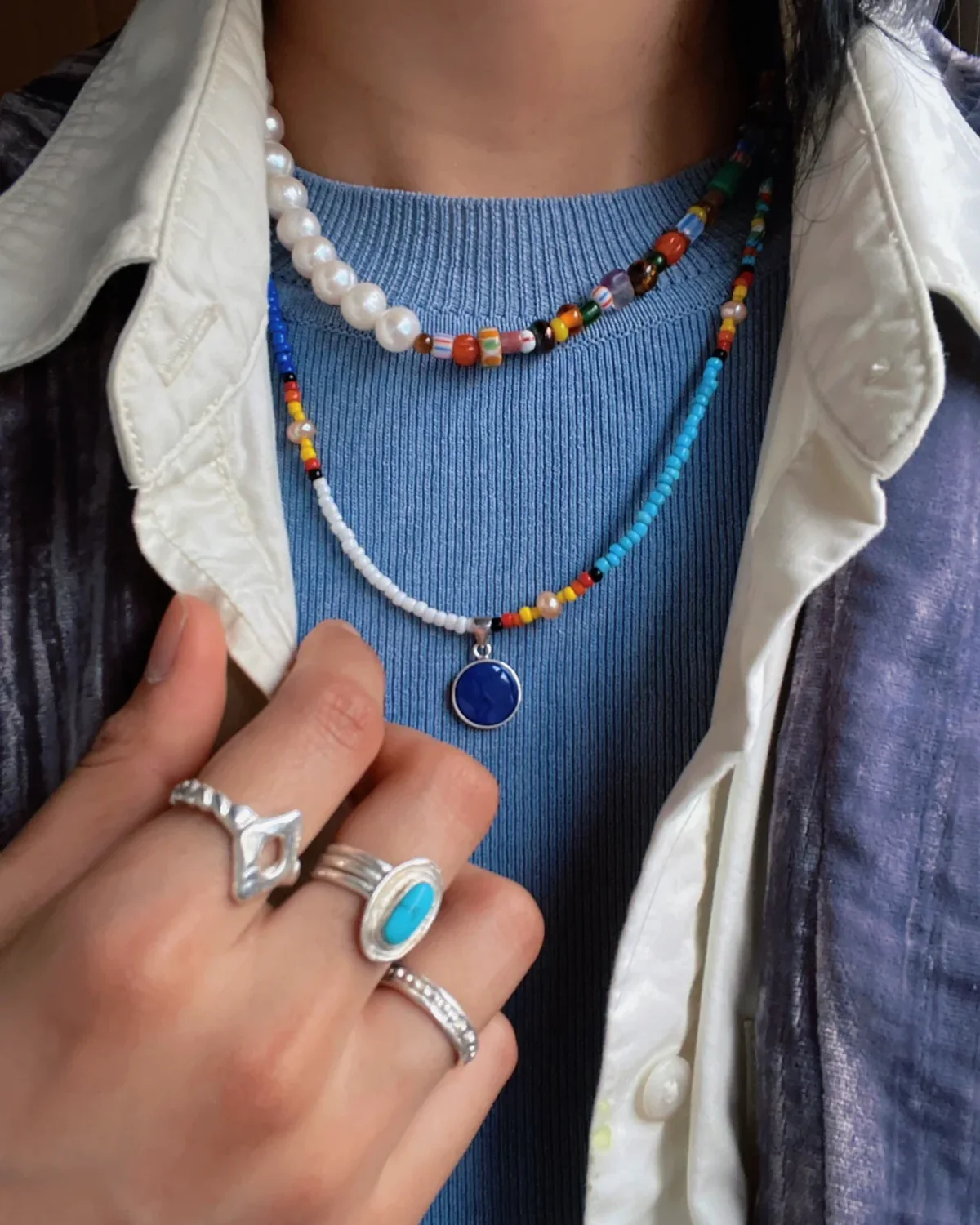
Layering does not always require a ruler-like staircase. Tender Tai Chi and Silver Spiral both sit close to the collarbone. The pink rhodonite beads form a fine, quiet line; the blue lace agate, glass, pearl and silver spiral create a larger, lower-feeling rhythm.
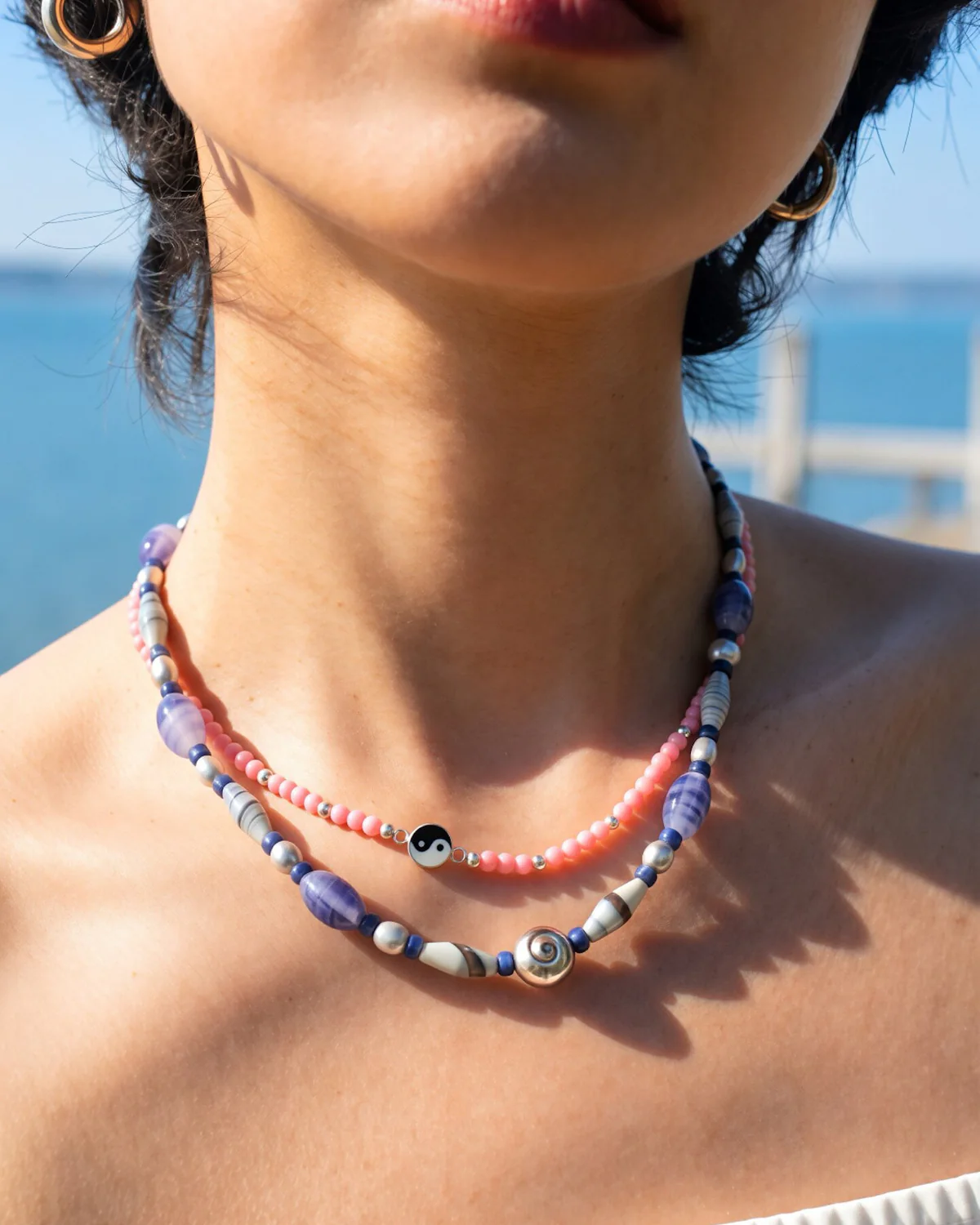
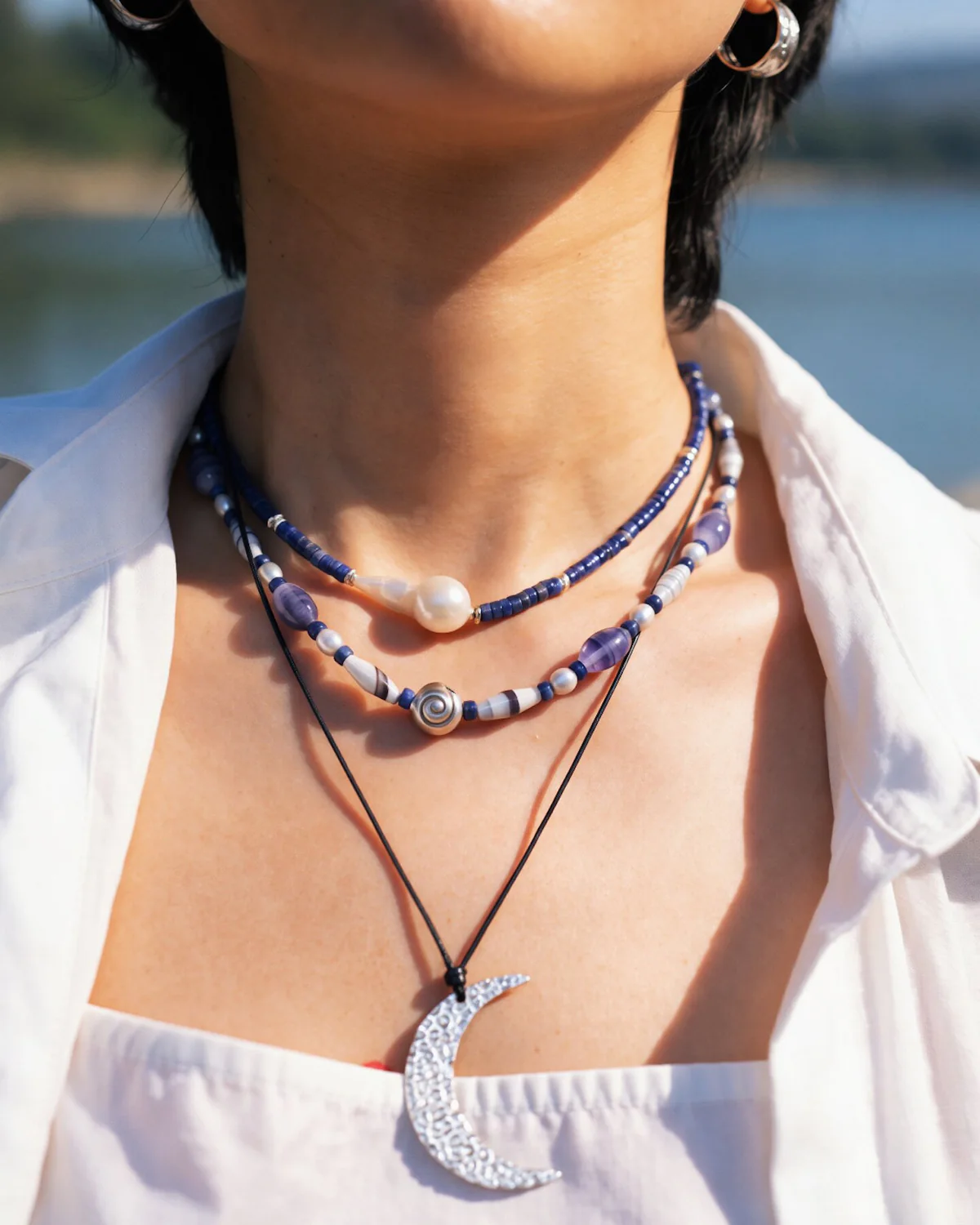
Why it works: the eye reads the thin pink strand before the broader blue one. The second image shows another answer to the same problem: two closely placed blue bead strands stay distinct through scale and pattern, while the cord pendant creates a decisive lower stop. This is how to stack necklaces that are the same length—or close to it—without pretending they are identical lines. Fit will vary by neck and bead weight, so try the pair on and reverse their order if the centres overlap.
How to layer necklaces without tangling
No necklace stack is completely motionless. Tangling happens because chains slide at different speeds, pendants swing, clasps migrate and the body turns. The goal is to reduce tangling, not promise that movement can be removed.
- Avoid several identical fine chains at similar lengths. They share the same path and can twist together quickly.
- Mix chain, bead and cord structures. Different surfaces and weights are less likely to behave as one bundle.
- Give the heaviest pendant the lowest position. Gravity helps it act as an anchor instead of crossing a lighter upper chain.
- Keep focal points visibly apart. Two inches between chain lengths is a useful first test, but check the pendant drops on your body.
- Fasten every necklace separately. This lets each piece settle on its own. If you wear three or more fine chains often, a necklace separator or necklace layering clasp can keep the clasps ordered at the back.
- Do a movement check. Turn, reach, put on a coat and look again. A stack that stays clear through ordinary movement is more useful than one arranged only for a photograph.
When the layering is built into one necklace
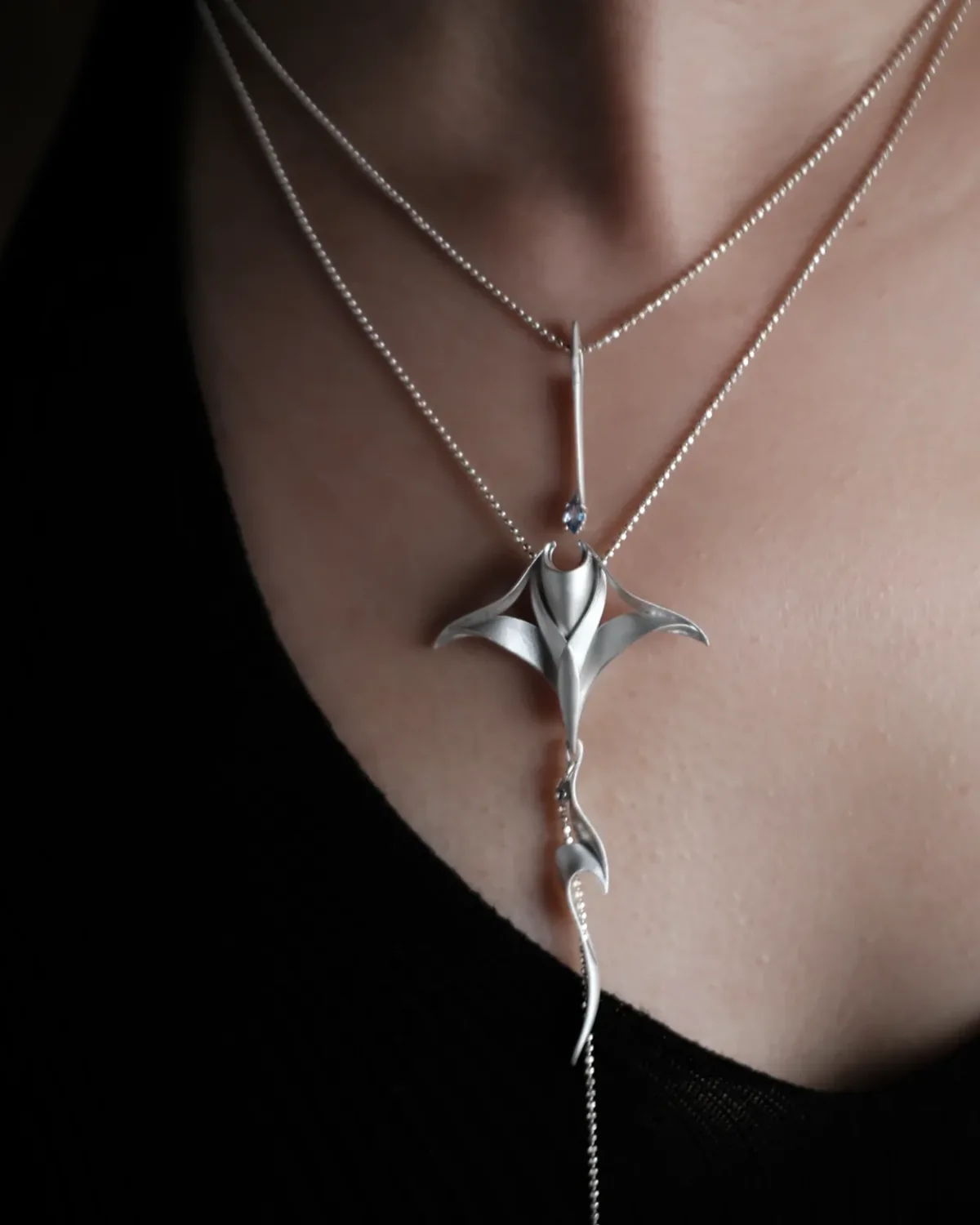
If you want the look with less daily adjustment, a pre-composed layered piece can help. The Manta Ray Necklace is designed as a 45 cm and 50 cm pair, with a narrow blue-stone drop above the wider silver ray. The Six Eyes Necklace uses a quieter upper curve and a lower topaz focal point. Both give you two visual levels, but the spacing has already been composed as part of the necklace rather than rebuilt each morning.
This is still a form of necklace layering, but it answers a different need. Choose it when you want the depth and movement of two chains with one finished design; choose separate necklaces when you want to change the order, material or focal point from day to day.
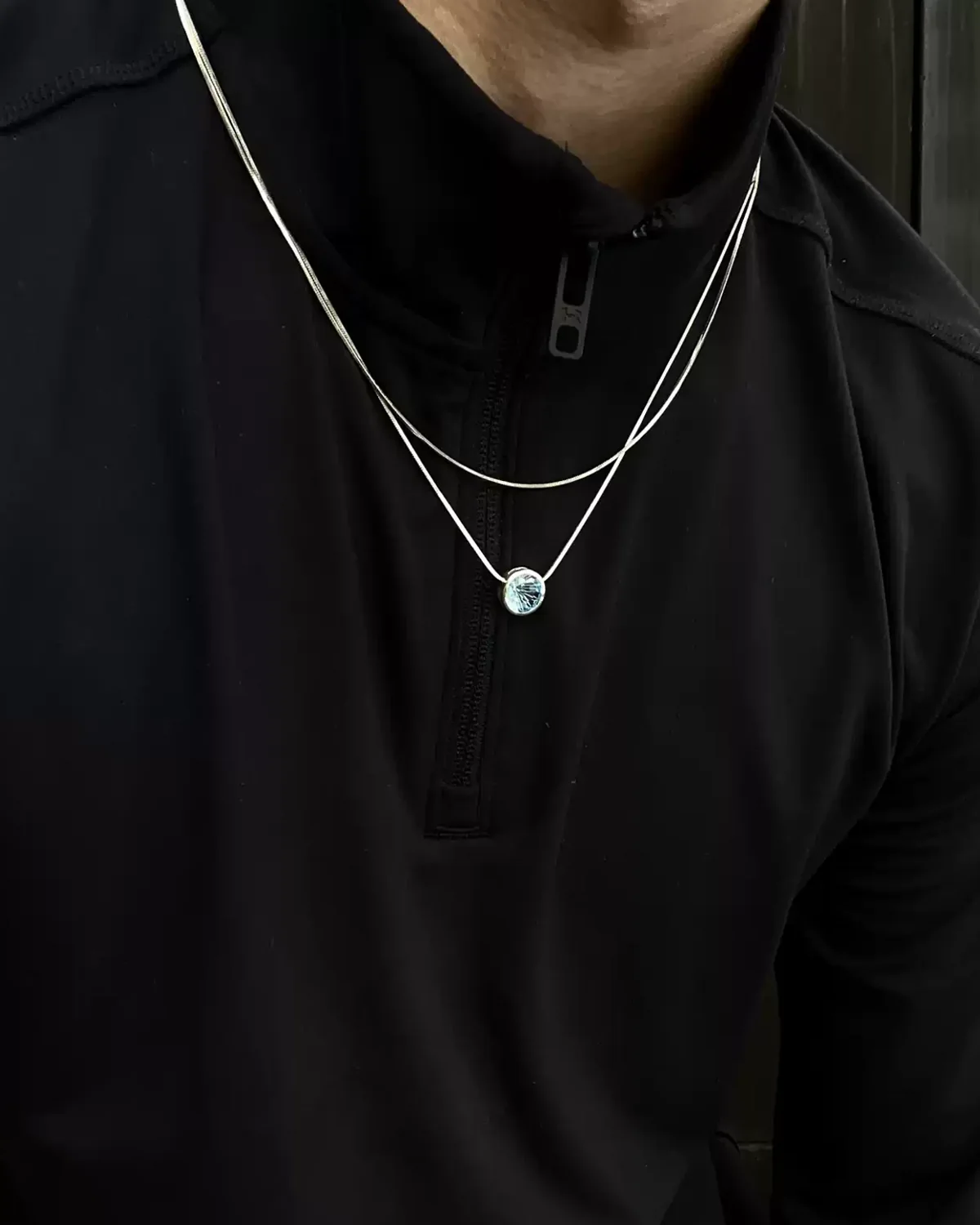
A necklace and neckline guide
Clothing changes where a necklace appears to end. Treat the neckline as another line in the composition.
Turtlenecks and crewnecks
For a turtleneck, either stay decisively short or move decisively long. A compact bead strand can sit around the collar, while a 55–65 cm pendant can fall over the knit. Avoid letting the lowest pendant stop exactly on the collar edge, where it may tip, disappear or catch.
With a crowneck sweater, place the short necklace above the fabric edge or move the focal point clearly onto the knit. A dense strand of pearls or beads can hold its shape; a small pendant on a fine chain may work better a little lower.
V-necks and open shirts
Echo the open shape without tracing it too literally. A short necklace can sit across the collarbones, while one pendant follows the V. An open button-down also gives longer necklaces a vertical frame, which is useful for silver pendant layering in autumn and winter.

Square, scoop and strapless necklines
These open necklines give you more horizontal room. Start with a short charm or bead strand, then use one pendant to break the open area vertically. Three layers can work, but the lowest one should still finish before the clothing interrupts it.
Let one metal hold the stack together
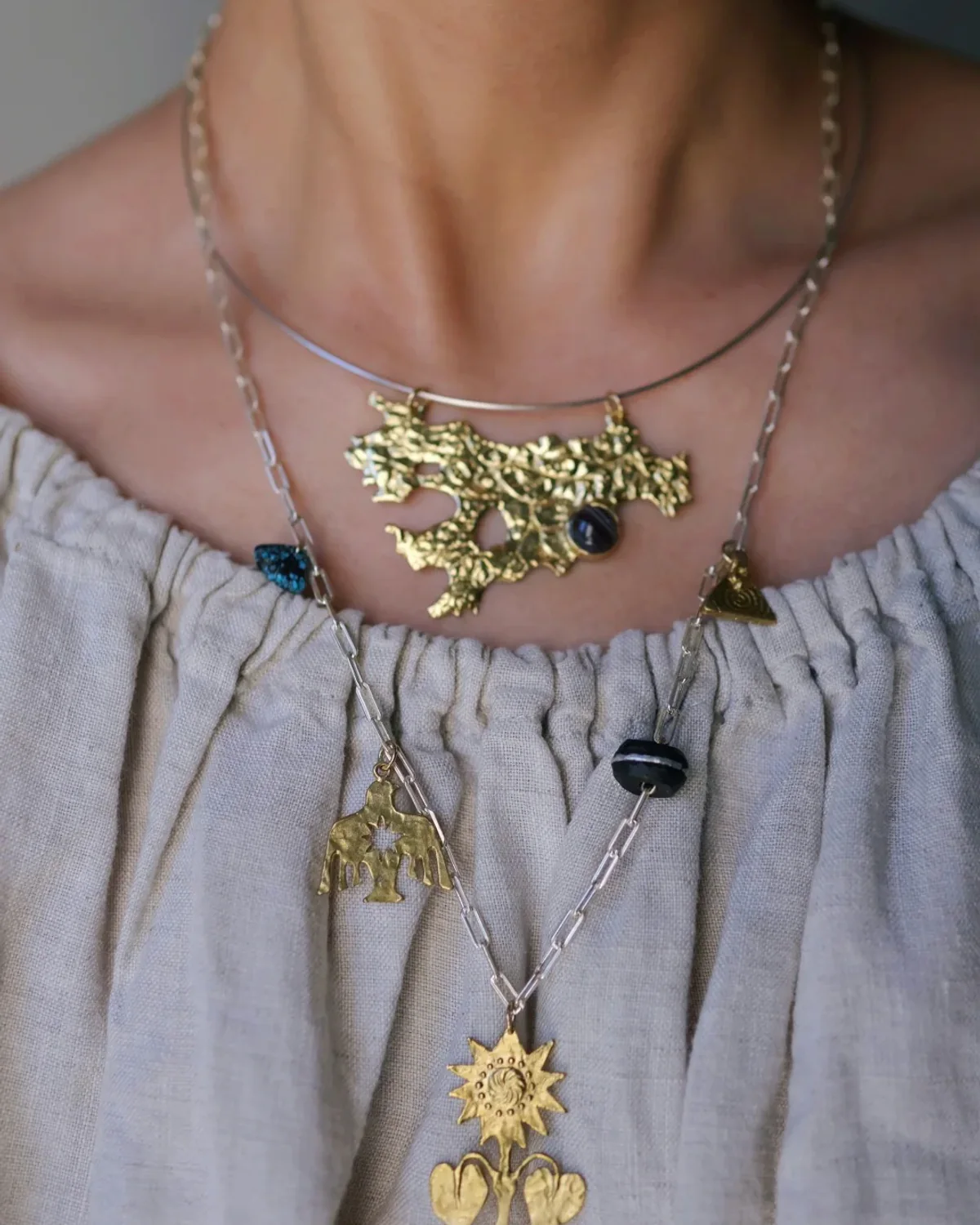
Repeating one metal is enough to make different silhouettes feel related. On dark fabric, silver becomes a clear line; on a pale open neckline, warm gold can connect a dense botanical collar, an open geometric pendant and one longer flower stem. To layer pendant necklaces without creating a row of competing objects, repeat the metal while changing chain length, density and direction.
Care for necklaces after wearing them together
Unfasten the necklaces one by one and store them separately, with each clasp closed. A soft pouch or divided box keeps chains from becoming a knot before the next wear; our jewelry care guide covers routine storage and silver care in more detail.
Mixed-material stacks need the gentlest material to set the care routine. The GIA pearl care guide advises keeping pearls away from perfume and cosmetics and wiping them with a very soft cloth after wear. GIA also notes that turquoise can be discolored by chemicals, cosmetics and skin oils, and recommends warm soapy water rather than steam or ultrasonic cleaning. Do not clean a layered stack as one object when its stones, pearls, cords and metals have different needs.
Let the pieces keep their own voices
A lasting way to wear layered necklaces is to make the arrangement feel discovered rather than assembled by rule. Begin with one piece that matters, create real space around it, and let the next necklace answer in a different material or rhythm. Some days the answer will be three layers; some days it will be two.
Wear slow. Wear soul.
Necklace layering FAQs
How many necklaces should you layer?
Two is enough to create a clear relationship; three allows a short, middle and anchor layer. More can work when the pieces are very different in scale, but each new necklace should add a distinct line, texture or focal point. Stop when removing one piece improves clarity.
What necklace lengths are best for layering?
A practical starting stack is 40–42 cm, 45–50 cm and 55–65 cm (roughly 16–17, 18–20 and 22–26 inches). Adjust for your neck size, clothing and pendant length. The visual distance between focal points matters more than exact chain-length increments.
How do you layer two necklaces without tangling?
Choose different lengths and, if possible, different structures: for example, a bead strand above a fine pendant chain. Put the heavier pendant lower, fasten both pieces separately and test the stack while moving. For two very fine chains, a necklace separator can help keep the clasps in order.
Can you layer necklaces that are the same length?
Yes, if their bead size, chain curve, extender setting or centre details make them fall differently. Two identical fine chains at exactly the same drop are more likely to overlap. Try reversing the order or lengthening one by a small amount if their centres meet.
How do you layer chokers with necklaces?
Treat the choker as the short horizontal line. Add one pendant that falls clearly below it rather than another necklace that touches its lower edge. A bead or ribbon choker paired with a fine 18–20 inch pendant often creates enough contrast in both texture and length.
Should every necklace in a stack match?
No. A stronger stack often combines pieces that share one detail but differ elsewhere: the same metal with different surfaces, one colour repeated across different stones, or organic shapes in different scales. The aim is kinship, not uniformity.